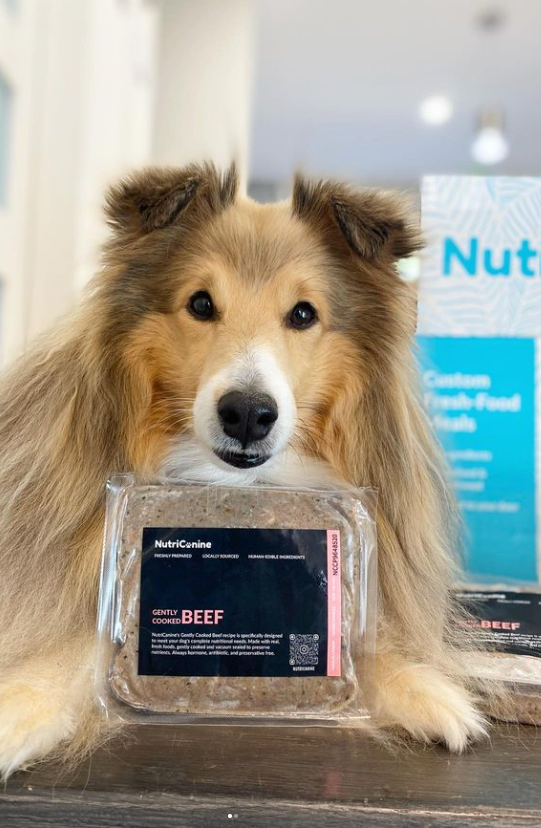
“I have three pups, all picky eaters, and they devoured their meals! I’m so happy to have found a quick, easy and super healthy food.”
 Verified Purchase
How NutriCanine Gently Cooked Dog Food Compares to Freshpet
How NutriCanine Gently Cooked Dog Food Compares to Freshpet
More dog owners are asking harder questions about what goes into their pet's bowl. After years of ultra-processed kibble dominating the pet food market, a growing body of research and a shift in consumer awareness are driving a clear trend: fresh food is having a moment, and for good reason.
Both NutriCanine and Freshpet represent genuine progress beyond conventional dry food. But as a companion animal nutritionist who works with pet owners and pet food brands daily, I want to be clear: not all fresh dog food is created equal. The differences between NutriCanine and Freshpet go well beyond packaging. They reflect fundamentally different approaches to ingredient sourcing, manufacturing, nutritional philosophy, and the relationship between a brand and the dog owner.

Why Pet Owners Are Moving Away from Kibble
Kibble is convenient, shelf-stable, and affordable. For decades, it was the default. But convenience comes at a nutritional cost that many pet owners are only now beginning to understand.
The extrusion process used to make dry kibble involves high heat and pressure that can degrade heat-sensitive nutrients, denature proteins, and reduce the bioavailability of certain amino acids and vitamins. Many formulas then add synthetic nutrient packs to compensate. The result is a food that meets minimum nutritional standards on paper, but may not support optimal health in practice — particularly for dogs with sensitive digestion, food intolerances, or chronic health conditions.
Fresh and gently cooked diets have been associated with improvements in digestibility, stool quality, coat condition, and energy levels. That shift is why brands like NutriCanine and Freshpet have earned serious attention from pet owners who want more for their dogs.
What Is Freshpet?
History and Product Philosophy
Freshpet was founded in 2006 in New Jersey with a mission to bring refrigerated, minimally processed pet food to the mass market. The company went public in 2014 and now distributes products across tens of thousands of retail locations in North America. Their model centres on grocery and big-box retail refrigeration units — the familiar red refrigerators you see in PetSmart, Walmart, and Kroger stores.
Their core philosophy is straightforward: fresh, refrigerated ingredients are better than shelf-stable kibble. That premise is largely correct. Freshpet uses real meat as the primary ingredient in most of its recipes and avoids artificial preservatives, relying on refrigeration for shelf life rather than chemical additives.
Typical Ingredients
Freshpet recipes generally include chicken, beef, turkey, or salmon as the lead protein, combined with vegetables such as peas, spinach, and carrots. Some recipes include grains like brown rice or barley. Egg is common as a supplemental protein source.
The brand offers multiple product lines, including Vital (a more premium tier), Select, and Nature's Fresh, each with varying ingredient profiles. Some formulas include rendered meat meals, and the quality of specific ingredients can vary between product lines.
Manufacturing Approach
Freshpet operates its own manufacturing facility, Freshpet Kitchen, in Bethlehem, Pennsylvania. Products are cooked, packaged, and then shipped through a refrigerated supply chain to retail refrigerators across the continent.
The scale of Freshpet's operation is significant. Supplying tens of thousands of retail locations requires a manufacturing footprint and a supply chain that is, by necessity, large and complex. Freshness is maintained through cold chain logistics, but the distance between production and the end consumer can be considerable.
Distribution
Freshpet's competitive advantage is accessibility. You can pick it up at your local grocery store. That convenience is real, and for many pet owners, it has been the entry point into fresh feeding. However, retail distribution also means the product sits in a shared refrigeration unit, is handled by multiple parties, and travels long distances before reaching the consumer.

NutriCanine at a Glance
NutriCanine is a Canadian-owned fresh dog food company committed to a different model: small-batch production, direct-to-consumer delivery, and a personalized feeding approach grounded in veterinary nutrition expertise.
Where Freshpet is built around retail scale, NutriCanine is built around the individual dog. Recipes are freshly prepared in Canada using locally sourced ingredients. The company's formulations are developed with companion animal nutrition expertise, with attention to life-stage appropriateness, breed considerations, and individual health factors.
The direct-to-consumer model means NutriCanine ships straight to your door, refrigerated and portioned. There is no middleman, no shared retail refrigerator, and no unnecessary time between production and delivery.
For Canadian dog owners specifically, NutriCanine's commitment to local production offers a meaningful advantage in ingredient freshness, supply chain transparency, and the satisfaction of supporting Canadian agriculture.

Ingredient Quality Comparison
Protein Sources
Protein quality is arguably the most important variable in a dog food formula. It determines amino acid availability, digestibility, and the food's ability to support lean muscle mass, immune function, and tissue repair.
NutriCanine uses whole, identifiable protein sources like chicken, beef, turkey, and salmon, without relying on rendered by-products or vague ingredient listings like "poultry meal." Whole meat proteins retain their natural amino acid profiles better than rendered alternatives and tend to be more digestible.
Freshpet also leads with named protein sources in most formulas, which is a positive. However, across its broader product range, ingredient quality varies by line. Some formulas include chicken meal or pea protein as supplemental sources, which can complicate the amino acid profile and reduce overall protein quality.
The quality of protein in your dog's food matters far more than the crude percentage listed on the label. Two foods can both show 28% crude protein, but one may provide far superior amino acid availability based on the source.
Carbohydrate Sources
NutriCanine incorporates digestible, nutritionally valuable carbohydrates such as sweet potato and butternut squash. Butternut squash offers beta-carotene, fibre, and potassium alongside its digestible carbohydrate content, making it a more functional ingredient than filler starches.
Freshpet recipes frequently include peas, carrots, and brown rice, which are nutritionally reasonable choices. Some formulas lean more heavily on legumes, which have come under scrutiny in recent years related to discussions around dilated cardiomyopathy (DCM) in dogs. The FDA's ongoing investigation has not produced definitive causal conclusions, but it underscores the value of dietary transparency.
Fruits and Vegetables
The produce used in a dog food formula contributes phytonutrients, antioxidants, and natural vitamins that support immune health, reduce oxidative stress, and complement the synthetic nutrients in any complete diet.
NutriCanine's recipes include a range of fruits and vegetables with genuine functional value. Ingredients like blueberries, cranberries, and leafy greens contribute flavonoids and antioxidants that can support cellular health. Several of these ingredients qualify as genuine dog superfoods based on their nutrient density and bioactive compound profiles.
Freshpet includes vegetables like spinach and carrots, which are meaningful additions. Overall, both brands perform reasonably well in this area, though NutriCanine's small-batch model allows for more targeted ingredient choices rather than the ingredient standardization required at retail scale.
Functional Ingredients
Omega-3 fatty acids are among the most evidence-supported functional ingredients in canine nutrition, with established benefits for skin and coat health, joint support, and anti-inflammatory function. NutriCanine incorporates omega-3-rich protein sources such as salmon and flaxseed, along with targeted supplementation where appropriate.
Probiotics and digestive enzymes can play a meaningful role in supporting gut health, particularly in dogs with sensitive digestion or a history of GI upset. NutriCanine's formulation philosophy incorporates these considerations. Freshpet does not consistently include probiotic supplementation across its product lines.
Both brands provide vitamin and mineral supplementation to meet AAFCO nutritional adequacy standards, though the bioavailability of synthetic versus naturally occurring nutrients is a consideration worth noting.
Artificial Ingredients
Neither NutriCanine nor Freshpet uses artificial preservatives in their recipes. Both rely on refrigeration or freezing for shelf stability. This is a genuine point of differentiation from conventional kibble, which often relies on chemical preservatives for its long shelf life.
NutriCanine avoids fillers, artificial colours, and synthetic flavouring agents. The ingredient list is transparent and purposeful. Freshpet similarly avoids many of these additives, though some product lines include ingredients that function as texture agents or binders without meaningful nutritional contribution.
Why Ingredient Quality Matters for Long-Term Health
It is worth addressing a point that often gets lost in marketing language: the ingredient panel tells you what is in the food, but it does not tell you how bioavailable those nutrients are, how digestible the protein sources are, or how processing has affected nutrient integrity. Heavily processed dog food ingredients, even when sourced from recognisable foods, can carry detectable levels of undesirable compounds.
Long-term health outcomes in dogs are influenced by the cumulative quality of what they eat daily, not just whether a food meets minimum nutrient thresholds. This is why ingredient sourcing, processing method, and formula transparency all matter.

Gently Cooked vs Retail Refrigerated Manufacturing
Even the most motivated, well-researched pet owners make nutritional mistakes when cooking for their dogs. Here are the most common ones:
Thermal Processing and Nutrient Retention
The way a dog food is cooked has direct implications for nutrient retention. High-heat processing, particularly the extrusion used in kibble, can significantly degrade heat-sensitive vitamins (especially B vitamins and vitamin C), denature proteins in ways that reduce digestibility, and accelerate fat oxidation.
Gently cooked dog food, by contrast, uses lower temperatures for shorter durations to achieve food safety while preserving more of the food's natural nutrient profile. This approach is closer to how you might cook for yourself at home than to industrial food manufacturing.
NutriCanine's gently cooked process is designed to hit food safety targets without the aggressive thermal exposure that can diminish nutritional quality. Fresh cooked dog food prepared this way compares favourably to raw and freeze-dried alternatives in terms of safety, digestibility, and palatability.
Freshpet uses a steam-cooking or gentle cooking process as well, which is meaningfully better than kibble extrusion. However, the scale of production and the demands of maintaining a national refrigerated supply chain introduce variables that smaller-batch producers are better positioned to control.
Food Safety and Shelf Life
Freshpet products have a refrigerated shelf life of roughly 7 days once opened, with unopened products lasting several weeks under proper refrigeration. This is appropriate for a minimally processed food.
NutriCanine's direct-to-consumer model, combined with small-batch production, reduces the time between cooking and consumption. Products arrive fresh, portioned, and ready to serve, with minimal handling between the production facility and the dog's bowl.
Protein Quality Preservation
Protein digestibility is affected by both ingredient source and processing temperature. Gentle cooking at lower temperatures helps preserve the structural integrity of amino acids, particularly those sensitive to heat degradation such as lysine and taurine. This has clinical relevance, as taurine deficiency has been implicated in certain forms of dilated cardiomyopathy in dogs.
NutriCanine's formulation approach accounts for amino acid adequacy beyond crude protein percentages, which reflects a more nutritionally rigorous standard.
Fat Oxidation
Fats, particularly unsaturated fatty acids like omega-3s, are vulnerable to oxidation when exposed to heat, light, and air. Oxidized fats can produce harmful peroxides and free radicals, and their beneficial properties are diminished. Small-batch production with faster turnover reduces the cumulative oxidative exposure of the finished product. This is another area where NutriCanine's production model offers a structural advantage.

Nutritional Philosophy Comparison
Freshpet
Freshpet's nutritional philosophy is built around improving on kibble for as many dogs as possible. That means standardized formulations designed to meet AAFCO nutritional adequacy standards for broad life stages (all life stages, or adult maintenance). This approach works well as a population-level solution and is a meaningful upgrade from conventional dry food.
The trade-off is that standardization, by definition, cannot account for individual variability. A large-breed senior dog with joint issues and a six-month-old working-breed puppy have very different nutritional requirements, and a single formula cannot optimally serve both.
NutriCanine
NutriCanine takes a fundamentally different approach. Feeding recommendations and recipe selection are personalized based on the individual dog, taking into account:
- Breed and size
- Life stage (puppy, adult, senior)
- Activity level
- Health considerations
- Body condition
Life-stage nutrition is not a marketing concept; the nutritional requirements of puppies and adult dogs differ substantially in ways that have real health implications. NutriCanine's personalized feeding model ensures that each dog receives a diet calibrated to its actual needs rather than the average of all dogs.
This is also relevant for dogs with specific health conditions. Dogs with IVDD, pancreatitis, IBD, or other chronic conditions often benefit significantly from targeted dietary modifications that a standardized retail formula cannot provide. Fresh turkey, for example, offers a lean protein profile with genuine advantages for dogs managing pancreatitis, and NutriCanine's recipe selection can be aligned with these kinds of clinical considerations.
Personalized nutrition is increasingly recognized within companion animal medicine as an important dimension of long-term health management, not a luxury add-on.
Puppy Approved; NutriCanine Gently Cooked Dog Food Review
Local Canadian Production vs Large-Scale Manufacturing
For Canadian dog owners, the question of where a pet food is made carries more weight than it might initially appear.
Benefits of Local Sourcing
NutriCanine sources ingredients locally in Canada, working with Canadian suppliers and producers. This has several practical advantages:
- Shorter supply chain means less time between harvest or processing and incorporation into the recipe
- Easier supplier auditing and quality verification
- Reduced transportation-related temperature fluctuations
- Support for Canadian agricultural producers
Freshpet manufactures in Pennsylvania and ships across North America. For Canadian consumers, this means the product travels a greater distance through more distribution layers before reaching the retail refrigerator. That is not necessarily disqualifying, but it is a relevant variable for freshness.
Supply Chain Transparency
Small-batch Canadian production allows for a level of ingredient traceability that large-scale manufacturing cannot easily replicate. When a brand sources from a limited number of local suppliers, it is better positioned to verify the quality and origin of each ingredient.
Home-prepared diets, despite the best intentions, frequently fail to meet complete nutritional standards without professional formulation oversight. NutriCanine's model offers the transparency and quality control of a professionally formulated, commercially produced food with the sourcing ethos closer to home cooking.
Environmental Considerations
Local production also carries a lower transportation carbon footprint than cross-border manufacturing and distribution. For dog owners who factor environmental impact into their purchasing decisions, this is a meaningful distinction.

Digestibility and Nutrient Bioavailability
Why Digestibility Matters
Digestibility is the percentage of a nutrient in a food that is actually absorbed and utilized by the body. It is arguably more important than the nutrient content on a label, because a food high in protein that is poorly digested provides less usable amino acids than a food with slightly lower crude protein but excellent digestibility.
Gently cooked whole-food ingredients tend to be more digestible than the rendered meat meals and extruded starches common in kibble. This is reflected in reduced stool volume, improved stool consistency, and better overall gastrointestinal health in dogs transitioned to fresh food diets.
Dogs with gassy digestion often show improvement when transitioned to a fresh food diet that uses more digestible protein and carbohydrate sources. This is a practical, observable indicator of improved digestive efficiency.
Amino Acid Availability
Not all proteins are nutritionally equivalent. Amino acid availability depends on the source of the protein, how it has been processed, and whether the full profile of essential amino acids (including taurine, methionine, and cysteine) is present in adequate quantities.
NutriCanine's formulation approach pays attention to amino acid completeness beyond the crude protein percentage, drawing on companion animal nutrition expertise to ensure the finished diet provides what dogs actually need from their protein intake.
Fat Utilization and Omega-3s
Fish is among the most valuable protein and fat sources in canine nutrition, providing both high-quality protein and marine-sourced EPA and DHA that are more bioavailable than plant-based ALA. NutriCanine incorporates fish-based recipes and omega-3 supplementation as part of a broader commitment to nutrient bioavailability.
The difference between fresh cooked and freeze-dried dog food in terms of fat retention and oxidative stability is worth understanding, and gently cooked formats with appropriate packaging and turnover times perform well on this dimension.
Nutrient Absorption
The matrix in which nutrients are delivered affects their absorption. Natural food matrices tend to support better micronutrient absorption than synthetic isolates added to a processed food base. This is one reason why a fresh food diet with real vegetables provides more functional nutrition than a kibble fortified with a vitamin premix, even when the label numbers look similar.

Cost Comparison and Value Analysis
Let's address the question that most dog owners are thinking about: what does this actually cost?
Freshpet is competitively priced for a fresh food product and falls at the lower end of the fresh food spectrum. For a medium-sized dog (approximately 30 lbs), daily feeding costs typically range from roughly $4–$7 CAD depending on the product line and retailer.
NutriCanine is a premium fresh food product, and its pricing reflects the cost of Canadian sourcing, small-batch production, personalized formulation, and direct-to-consumer delivery. Daily feeding costs are higher, typically in the $6–$12 CAD range for a similar dog, depending on the recipe and portion size.
However, value is not the same as price. When comparing these two products, the relevant questions are:
- What is the quality of the ingredient you are paying for?
- Is the feeding amount calibrated to your specific dog, reducing waste and overfeeding?
- Does the convenience of home delivery offset the convenience of retail availability?
- Does the nutritional outcome justify the premium?
For many pet owners, particularly those whose dogs have specific health needs, a personalized, higher-quality diet that requires fewer veterinary visits or fewer interventions for chronic diet-related conditions can represent a genuine cost saving over time. There are also cost-effective strategies for fresh feeding that can help manage budget without compromising quality.
Recommendation from a Pet Nutritionist
“As a companion animal nutritionist, I am frequently asked to weigh in on specific brand comparisons, and the NutriCanine vs Freshpet question comes up often among Canadian pet owners.
Here is my honest, evidence-grounded perspective.
Freshpet may be a good fit if:
- You are transitioning away from kibble for the first time and want an accessible, affordable entry point into fresh feeding
- Your dog is generally healthy, without known food sensitivities, digestive issues, or chronic health conditions
- Retail accessibility is a priority and home delivery is not practical
- Budget constraints make premium fresh food cost-prohibitive
NutriCanine is likely the stronger choice if:
- You want a diet genuinely tailored to your dog's breed, age, activity level, and health status
- Your dog has a sensitive stomach, food sensitivities, or a chronic condition that warrants dietary precision
- Ingredient sourcing transparency and Canadian production are important to you
- You want the convenience of home delivery without the nutritional trade-offs of retail shelf products
- You are committed to optimal, not just adequate, nutrition for your dog
Fresh, gently cooked nutrition is especially valuable for:
- Senior dogs with reduced digestive efficiency
- Puppies requiring precise life-stage nutrition
- Dogs with IBD, pancreatitis, or food allergies
- Dogs recovering from illness or surgery
- Dogs that have historically been picky eaters who respond better to palatable, whole-food diets
- Dogs with skin and coat issues that may be linked to dietary fat quality and omega-3 status
- Dogs with conditions like low-fat requirements, where careful formulation matters
On ingredient quality and digestibility: The difference between a food that meets AAFCO minimums and a food that delivers optimal bioavailable nutrition is real, and it accumulates over years of daily feeding. I always encourage pet owners to think beyond the guaranteed analysis panel and ask about ingredient quality, processing method, and formulation expertise. Common dog food myths can make this evaluation harder, so grounding your comparison in the science matters.
Both NutriCanine and Freshpet are genuinely better choices than most conventional kibble on the market. But for pet owners who want the most from their dog's diet, NutriCanine's personalized approach, locally produced Canadian recipes, formulation expertise, and gently cooked manufacturing process make it the more complete nutrition solution. Individualized nutrition supports better health outcomes, and that is not a marketing claim, it is the direction that companion animal medicine is moving.”
-Andrea Geiger, MSc.
Companion Animal Nutritionist
Final Verdict
Comparing NutriCanine vs Freshpet is ultimately a comparison between two different models of fresh dog food delivery. Freshpet democratized fresh pet food through retail accessibility. That contribution matters, and the brand deserves credit for moving the industry forward.
NutriCanine represents the next step: fresh food that is not just better than kibble, but genuinely optimized for the individual dog, produced locally with traceable Canadian ingredients, and delivered directly to your home with personalized feeding guidance.
For Canadian dog owners who are serious about their dog's long-term nutritional health, NutriCanine is the more complete solution.
NutriCanine vs Freshpet: Comparison Table
Explore NutriCanine meal plans and find the right recipe for your dog today.
Whether your dog is a bouncy puppy or a wise senior, a working breed or a lap dog, NutriCanine's personalized approach means their food is built around them, not around the average dog. That is a meaningful difference, and it is one your dog will likely feel in their energy, coat, and digestion.