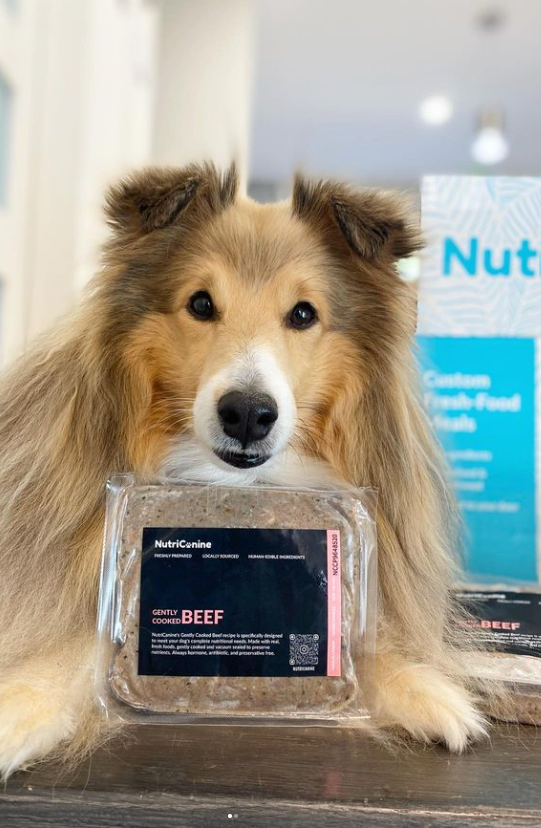
“I have three pups, all picky eaters, and they devoured their meals! I’m so happy to have found a quick, easy and super healthy food.”
 Verified Purchase
How to Choose the Best Low Fat Food for Dogs — And Read Labels Right
How to Choose the Best Low Fat Food for Dogs — And Read Labels Right
Fat is an essential macronutrient in a dog's diet. It supports healthy skin and coat, aids in the absorption of fat-soluble vitamins (A, D, E, and K), fuels cellular function, and provides a concentrated source of energy. For most healthy dogs, a moderate level of dietary fat is not only appropriate, it is necessary.
But for a growing number of dogs, too much fat can become a problem. Whether due to a medical diagnosis, ongoing weight struggles, or a sensitive digestive system, many pet owners find themselves searching for low fat food for dogs that is both nutritionally complete and genuinely palatable. This guide will help you understand what a low fat dog diet actually means, how to evaluate food labels accurately, and how to choose a product that supports your dog's specific needs.

Why Some Dogs Need a Low Fat Diet
Not every dog requires a fat-restricted diet, but certain health conditions and life circumstances make one medically or practically appropriate.
Pancreatitis is one of the most common reasons a veterinarian will recommend dietary fat restriction. The pancreas produces lipase, the enzyme responsible for digesting fat. When the pancreas becomes inflamed, either acutely or chronically, a high-fat meal can trigger or worsen an episode. Dogs with pancreatitis benefit significantly from a carefully managed, low fat dog diet that reduces the workload placed on the pancreas during digestion.
Obesity and weight management represent another major use case. Fat contains roughly 8.5 kilocalories per gram, compared to approximately 3.5 kcal/g for protein and carbohydrates. Calorie-dense diets can contribute to weight gain over time, particularly in less active dogs or those prone to holding weight (Beagles, Labrador Retrievers, and Basset Hounds are common examples). Reducing dietary fat is one practical approach to decreasing overall caloric density without dramatically shrinking portion sizes.
Hyperlipidemia, elevated triglycerides or cholesterol in the blood, is another condition that responds to dietary fat reduction. Certain breeds, including Miniature Schnauzers, are predisposed to this condition and may need a low fat dog diet as part of long-term management.
Gastrointestinal (GI) disorders, including inflammatory bowel disease and lymphangiectasia, sometimes call for reduced dietary fat to minimize digestive stress and improve nutrient absorption.
If your dog has been diagnosed with any of the above conditions, always work with your veterinarian before making significant dietary changes.

What Is Considered a Low Fat Diet for Dogs?
There is no single universal threshold, but the most commonly accepted benchmark among veterinary nutritionists is less than 10% fat on a dry matter basis for a low fat dog food, with many clinical cases (such as dogs with pancreatitis) targeting less than 8% and sometimes below 5% for severe cases.
The challenge is that fat percentages are reported differently across product types, which leads to a great deal of confusion among pet owners.
Dry Matter Basis vs As-Fed Values: Why It Matters
When you look at a pet food label, the guaranteed analysis lists nutrients as fed (meaning the values reflect the food's composition as it is served, including water content). This creates an apples-to-oranges comparison problem when you are trying to compare a wet food (which may contain 70–80% moisture) to a kibble (which typically contains around 10% moisture).
To compare foods fairly, you need to convert all values to a dry matter basis, which removes moisture from the equation entirely.
Here is how the calculation works:
- Subtract the moisture percentage from 100 to get the dry matter percentage.
- Divide the as-fed fat percentage by the dry matter percentage.
- Multiply by 100.
Example: A gently cooked wet food lists 7% fat as-fed and 74% moisture.
- Dry matter = 100 − 74 = 26%
- Fat on dry matter basis = (7 ÷ 26) × 100 = 26.9% fat DMB
Now compare that to a kibble with 12% fat as-fed and 10% moisture:
- Dry matter = 100 − 10 = 90%
- Fat on dry matter basis = (12 ÷ 90) × 100 = 13.3% fat DMB
In this example, the kibble is actually lower in fat on a dry matter basis (despite the wet food having a lower as-fed percentage). This is why the as-fed vs dry matter distinction is so important for dog owners managing fat intake.

Wet Food vs Kibble: Which Is Better for Low Fat Diets?
Both wet and dry foods can be formulated to be low in fat, but there are some meaningful differences in how each type tends to perform in practice.
Kibble is more calorie-dense and often higher in fat on a dry matter basis, though there are excellent low fat dry food options available. Because the moisture has been removed during processing, it is easier for manufacturers to achieve a wide range of fat percentages.
Wet and fresh foods have a naturally high moisture content, which can make the as-fed fat percentage appear low even when the dry matter value is moderate. That said, high-quality wet or gently cooked foods offer some distinct advantages for dogs with GI sensitivities:
- Improved digestibility. Lightly cooked proteins are generally more bioavailable than heavily processed kibble. This means more of what your dog eats is actually absorbed and used.
- Higher palatability. Dogs with nausea or low appetite (common in those recovering from pancreatitis) are often more willing to eat fresh, aromatic food.
- Hydration support. High moisture content supports kidney function and overall hydration, which is often secondary in importance but clinically relevant in some cases.
Fresh or lightly cooked foods may be particularly beneficial for dogs with pancreatitis, obesity, or chronic digestive issues, provided the recipe itself is appropriately fat-controlled.

A Pet Nutritionist’s Recommended Option: NutriCanine's Turkey Recipe
For dogs that require a lower fat diet, NutriCanine's Gently Cooked Turkey Recipe is one of the most nutritionally appropriate commercially available options in Canada.
The recipe is built around fresh ground turkey which is a naturally lean protein that provides high-quality amino acids without an excess of saturated fat. It is complemented by whole-food ingredients including sweet potatoes, whole oats, carrots, kale, turkey liver, turkey heart, and a vitamin and mineral supplement formulated for complete and balanced nutrition.
Key reasons NutriCanine’s Turkey Recipe stands out for low fat feeding:
- Intentionally low fat formulation. NutriCanine explicitly positions this recipe for dogs with pancreatitis or those requiring weight management, with a fat profile appropriate for fat-sensitive individuals.
- Human-grade, locally sourced ingredients. Over 95% of NutriCanine's ingredients are sourced within 100 kilometres of their facility, with rigorous supplier auditing and batch testing for foodborne pathogens including salmonella, E. coli, and listeria.
- Gently cooked, not ultra-processed. Kettle-cooking at low temperatures preserves nutritional integrity better than high-heat extrusion processes used in most kibble manufacturing.
- No artificial preservatives, hormones, or antibiotics. The food is flash-frozen and vacuum-sealed to maintain freshness without chemical additives.
- Formulated by an on-staff canine nutritionist to meet recognized complete and balanced nutritional standards.
Real-world feedback from dog owners reinforces this. Owners of dogs recovering from pancreatitis and those managing miniature schnauzers (a breed especially prone to both pancreatitis and hyperlipidemia) have reported positive outcomes transitioning to this recipe under veterinary guidance.
This is not a therapeutic veterinary diet and is not intended to replace veterinary-prescribed nutrition in severe clinical cases. However, for dogs with mild-to-moderate fat sensitivity, dogs in weight management programs, or owners seeking a high-quality maintenance diet with a lower fat profile, the NutriCanine Turkey Recipe is a strong, practical choice.

How to Choose the Best Low Fat Dog Food
If you are evaluating options beyond a single product, here is a practical framework for identifying the best low fat dog food for your dog's needs.
1. Always convert to dry matter basis. Do not compare as-fed fat percentages across different food formats. Use the calculation described earlier to make meaningful comparisons.
2. Know your target range. For general weight management, target less than 10% fat on a dry matter basis. For dogs with pancreatitis or hyperlipidemia, your veterinarian may recommend a stricter threshold, often below 8%, and in some cases below 5%.
3. Look at the ingredient list, not just the guaranteed analysis. Fat sources matter. Rendered animal fat, coconut oil, and high-fat organ meats (like duck liver) can elevate fat levels significantly. Lean proteins such as turkey, white fish, and chicken breast are generally preferred in low fat formulations.
4. Verify the food is nutritionally complete. A low fat food that is not nutritionally balanced can create other deficiencies over time. Look for a statement of nutritional adequacy on the label (e.g., "meets the nutritional levels established by AAFCO" or an equivalent Canadian standard).
5. Introduce new food gradually. Regardless of the food you choose, transition over 7 to 10 days to avoid digestive upset, especially in dogs with a history of GI issues.
6. Consult your veterinarian for medical cases. If your dog has been diagnosed with pancreatitis, hyperlipidemia, or a related condition, dietary management should be part of a broader treatment plan. A board-certified veterinary nutritionist can provide formalized dietary guidance when needed.

Final Thoughts
Managing dietary fat is an important tool in supporting the health of dogs with specific medical conditions, weight challenges, or digestive sensitivities. Understanding the difference between as-fed and dry matter values, recognizing what thresholds define a low fat diet, and selecting a food with high-quality, digestible ingredients are all essential steps in making an informed choice.
Not all dogs need a fat-restricted diet and inappropriately restricting fat in healthy dogs can cause its own problems. But for the dogs that do benefit, the right low fat dog food can make a meaningful difference in quality of life, digestive comfort, and long-term health outcomes.
If you are looking for a high-quality starting point, NutriCanine's Turkey Recipe offers a thoughtfully formulated, gently cooked option that aligns well with the needs of fat-sensitive dogs. As always, work alongside your veterinarian to confirm that any dietary change is appropriate for your individual dog's health profile.