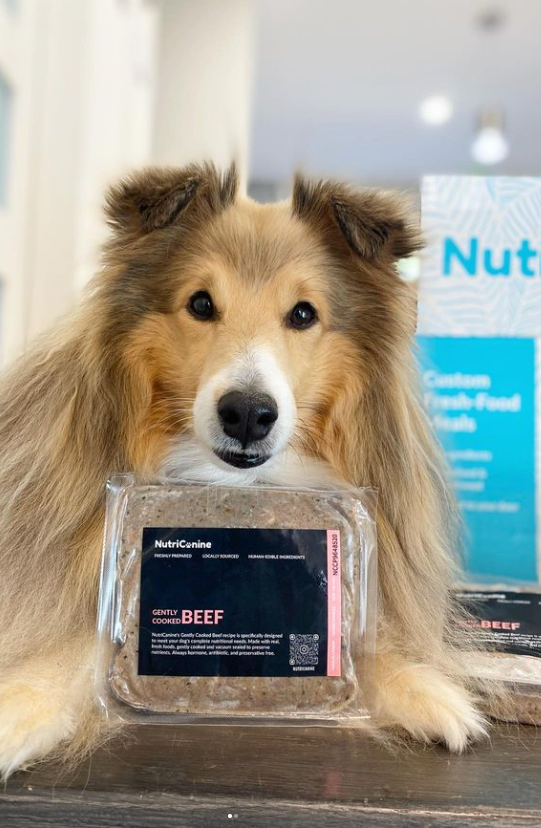
“I have three pups, all picky eaters, and they devoured their meals! I’m so happy to have found a quick, easy and super healthy food.”
 Verified Purchase
Are Home-Prepared Dog Diets Really Complete and Balanced? New Study Says No
Home-prepared diets for dogs have exploded in popularity over the last decade. More pet parents than ever are swapping kibble for meals they cook themselves—often with the belief that fresh food is healthier, more “natural,” and better quality than commercial diets.
But does home-prepared automatically mean nutritious?
A new 2025 study published in the American Journal of Veterinary Research (AJVR) sheds light on this very question. Drawing on data from the Dog Aging Project—one of the largest, most comprehensive canine health studies ever conducted—researchers evaluated 1,726 home-prepared dog diets to answer a simple but critical question:
👉 How many homemade diets are actually nutritionally complete for adult dogs?
The results were eye-opening:
Only 6% of the diets were potentially complete and balanced for adult maintenance according to AAFCO standards. While nearly 75% were deficient in key nutrients. Let’s dive further in and examine what the study found and what this means for pet owners.

Why More Dog Owners Are Turning to Home-Prepared Diets
Surveys show a dramatic rise in homemade dog feeding. In 2008, only 3% of pets ate a primarily home-prepared diet. By 2020–2022, that number increased to 8%, with another 21% receiving home-cooked meals as a secondary component.
Why the shift?
1. Transparency and ingredient sourcing
One of the strongest drivers behind the rise in home-prepared dog diets is a growing desire for complete transparency about what goes into a dog’s food. Pet owners increasingly want to know exactly where ingredients come from—how they were grown or raised, how fresh they are, and whether they align with their personal values around health, sustainability, or animal welfare.
The 2025 AJVR Dog Aging Project study highlighted that concerns about ingredient sourcing remain a top motivator for owners who switch to homemade diets. Many participants reported choosing home-prepared meals because they felt more in control: they could buy their own meats, hand-select vegetables, and avoid ingredients they perceived as low quality or overly processed.
This desire for ingredient transparency stems from several factors:
-
Distrust in certain commercial pet foods, especially after past recalls and high-profile safety incidents.
-
A push toward “clean eating” for the whole family, which increasingly includes pets.
-
Rising interest in local, organic, human-grade, or pasture-raised ingredients.
-
A belief that homemade automatically means fresher and healthier.
While this motivation is rooted in good intentions, the study also found that despite owners choosing high-quality whole foods, ingredient quality alone does not guarantee nutritional adequacy. Without expert formulation, even the freshest and most premium ingredients can still lead to deficiencies or imbalances. That’s why many veterinary nutritionists emphasize that sourcing and nutrition must go hand in hand.
2. Desire to “feed the best”
Another major reason dog owners turn to home-prepared diets is the deeply rooted desire to “feed the best”. For many people, feeding their dog is no longer just a routine task—it’s an emotional expression of love, care, and responsibility. As a result, more owners are gravitating toward diets they associate with health, wellness, and longevity, and fresh homemade meals naturally fit that image.
In recent years, there has been a massive cultural shift in the way pets are viewed. Dogs are now seen as true family members, and their nutrition is treated with the same scrutiny as human food. Owners who prioritize their own health through whole foods, organic produce, or minimally processed meals often want to extend those same habits to their pets. Fresh, homemade diets feel more intentional, more nurturing, and more aligned with the idea of providing “the very best” care.
The AJVR study supports this trend, noting that many owners cited a belief that fresh or home-prepared meals are inherently healthier than commercial options. This perception is heavily influenced by:
-
The rise of human wellness culture, where fresh and unprocessed foods are associated with vitality and disease prevention.
-
Marketing narratives around “natural” or “real food,” which shape the way owners think about pet nutrition.
-
Visible short-term benefits, like improved appetite, enthusiasm at mealtimes, or softer stools, which reinforce the belief that homemade food must be superior.
For some owners, preparing meals at home feels like an investment in their dog’s long-term health—one that could promote better digestion, shinier coats, and even a longer lifespan.
Of course, as the study emphasizes, while the intention to “feed the best” is admirable, homemade diets must also be nutritionally complete to truly support long-term health. Fresh feeding can absolutely be beneficial, but only when balanced properly to meet all essential nutrient requirements..
3. Perceived benefits of raw or fresh diets
Among owners who feed raw or incorporate raw components into their dog’s diet, many report noticeable physical changes that reinforce their belief that raw food is superior. While these observations are often anecdotal rather than scientifically proven across all dogs, they remain powerful motivators for those committed to raw feeding.
-
Shinier coat
Raw feeders commonly describe dramatic improvements in coat quality after switching from kibble. They often attribute this to the higher moisture content and elevated levels of naturally occurring omega-3 fatty acids found in raw meats and fish. A softer, glossier coat is seen as a visible indicator of improved internal health, even though these benefits can also be achieved with balanced cooked diets or commercial fresh foods. -
Cleaner teeth
Another frequently cited benefit is better dental hygiene. Some owners believe that chewing raw meaty bones or unprocessed proteins helps reduce plaque buildup and keeps teeth cleaner. While certain chewing behaviors can indeed support oral health, the AJVR study and veterinary dental experts note that raw feeding is not a universal solution—and in some cases, raw bones may increase risks such as tooth fractures or gastrointestinal injury. -
Reduced stool volume
Many raw feeders point to smaller, firmer stools as evidence of better nutrient absorption. Raw diets often contain fewer fillers or indigestible carbohydrates than some commercial kibbles, which can result in decreased stool output. Owners interpret this as their dog “using more of the food,” reinforcing a belief in improved digestion, even though balanced cooked diets can offer similar digestibility without the microbial risks associated with raw feeding.
Overall, these perceived benefits play a significant role in why some owners remain loyal to raw feeding long-term. However, the AJVR study underscores that these observations—while meaningful to owners—do not necessarily equate to complete and balanced nutrition, which is the foundation of long-term health and disease prevention.
4. Pets as family
For many pet owners, dogs aren’t just animals—they’re cherished members of the family, and cooking for them is a deeply personal, nurturing act. The process of selecting fresh ingredients, chopping vegetables, and preparing protein can feel rewarding, almost like expressing love through food. Owners take pride in knowing exactly what their dogs are eating and in creating meals tailored to their tastes and preferences.
Yet despite the satisfaction and emotional connection, one significant challenge looms over home-prepared diets: achieving complete, balanced nutrition. Feeding a dog isn’t simply about choosing high-quality ingredients—dogs require precise proportions of proteins, fats, vitamins, and minerals to thrive, and missing even one nutrient can compromise health. This complexity makes it easy for well-meaning owners to unintentionally fall short, highlighting the importance of understanding canine nutrition beyond the joy of cooking.

What the Dog Aging Project Study Revealed
The Dog Aging Project, which has enrolled more than 45,000 dogs, included a new free-text survey option in 2023 allowing owners to describe their dog’s home-prepared diets in detail. Researchers analyzed:
-
All ingredients owners reported
-
How diets were prepared
-
Whether commercial foods were added
-
Whether any nutritionist guided the recipe
-
Whether the ingredient lists could potentially form a complete diet
The Key Findings of The Study
1. Only 6% of diets were potentially complete
Despite generous assumptions, only 107 out of 1,726 diets could meet AAFCO adult maintenance nutrient profiles.
2. Nearly half included some commercial food
About 45% of owners included kibble, canned food, or commercial toppers alongside home-cooked items. However, the percentage used varied dramatically.
3. The average recipe contained 8.9 ingredients
Homemade diets weren’t simple—many were complex but still nutritionally incomplete.
4. Ingredient variety was enormous
Owners fed everything from:
-
Chicken, beef, and turkey
-
Exotic meats like alpaca, ostrich, and kangaroo
-
Vegetables ranging from carrots to kelp
-
Fruits, oils, nuts, dairy, bone products
-
Even non-food items like clay and diatomaceous earth
But ingredient variety ≠ nutritional adequacy.
5. Only 0.8% of diets were confirmed to be formulated by a board-certified veterinary nutritionist
Despite the risks, very few owners sought expert guidance.
6. 44% of diets were classified as nutritionally deficient
These diets lacked 10+ essential nutrients or could not be built into a complete formulation using nutrition software.
So What’s Missing? Why are Homemade Diets Often Incomplete?
Even if owners use great ingredients, several issues commonly lead to deficiencies.
1. No control over nutrient balance
Dogs need over 40 essential nutrients, all in precise ratios. It’s nearly impossible to hit those targets without formulations designed by a qualified nutritionist.
Common deficiencies include:
-
Calcium
-
Copper
-
Iodine
-
Iron
-
Zinc
-
Vitamin E
-
B vitamins
-
Essential fatty acids
The study found that only a very small number of diets met adequate micronutrient levels.
2. Calcium imbalance is extremely common
Many homemade diets contain way too much phosphorus (from meat) and far too little calcium unless bone meal or a carefully measured supplement is used.
Some owners added eggshells or bones, but these additions were inconsistent and not always nutritionally appropriate.
3. Vague ingredients cause huge nutritional gaps
Terms like:
-
“Fresh vegetables”
-
“Varied proteins”
-
“Meat”
-
“Greens”
-
“Squash”
…could mean dozens of different things. Without precise nutrient data, a diet can't be accurately balanced.
4. Recipes from blogs and cookbooks were often inadequate
Previous studies have shown:
-
Only 5% of published home-cooked recipes meet AAFCO/NRC guidelines.
None of the disease-specific homemade diets (for kidney disease, cancer, etc.) were appropriately formulated.
The Dog Aging Project's real-world owner data mirrors this.

The Risks of Feeding an Incomplete Homemade Diet
1. Long-term deficiencies
Chronic nutrient deficiencies can lead to:
-
Bone disease
-
Heart abnormalities
-
Neurological issues
-
Immune dysfunction
-
Skin and coat issues
-
Growth abnormalities in puppies
Several case studies cited illnesses—including seizures—in puppies fed unbalanced homemade diets.
2. Toxic or harmful ingredients
Some owners fed foods that are unsafe for dogs, including:
-
Garlic
-
Onions
-
Certain mushrooms
-
Excessive tuna (heavy metals)
-
Avocado
-
Cat food (not nutritionally appropriate)
3. Lack of consistency
Many owners reported rotating or changing recipes often. While variety can be good, nutrient imbalances compound over time.
4. Raw diet risks
Raw diets may:
-
Fail to meet nutrient requirements
-
Carry pathogens like Salmonella or E. coli
-
Pose risks to immunocompromised people or pets
Even when coders manually adjusted for raw diets, many remained deficient.
Dr Francis Cabana as he analyses and reacts to YouTube's most-watched home-cooked dog food recipes. With his wealth of knowledge and experience, he'll provide valuable insights into the nutritional value and potential benefits or risks associated with these homemade meals.
Can Homemade Diets Ever Be Safe and Balanced?
Yes—but only when formulated properly.
A balanced homemade diet must be created by a certified companion animal nutritionist or a program designed specifically for complete formulations.
Even then, owners must follow the recipe exactly, including:
-
Proper supplements
-
Correct proportions
-
Accurate cooking methods
-
No ingredient substitutions
However, studies show that only 13% of owners follow veterinary-designed recipes as written.
This is one reason why many veterinarians recommend commercially prepared fresh diets: they offer the freshness owners want, with the nutrient completeness dogs need.
NutriCanine: Fresh, Home-Style Meals Balanced by Certified Canine Nutritionists
For dog owners who love the idea of home cooking—but want confidence in complete, safe, nutritionally balanced meals—NutriCanine bridges the gap.
NutriCanine Recipes Are What Home-Prepared Diets Should Be
Every NutriCanine recipe is:
✔ Formulated by certified canine nutritionists ✔ Meets AAFCO nutrient profiles for all life stages—including puppies
✔ Made from whole-food, human-grade ingredients
✔ Gently cooked for safety and digestibility
✔ Portioned precisely, eliminating the guesswork
✔ Free from fillers (no corn, soy, wheat, or by-products)
✔ Designed to mirror a home-cooked diet, but with proper supplementation
We use real ingredients—like fresh chicken, lean beef, squash, fish, organ meats, and nutrient-dense vegetables—and combine them with species-appropriate supplements to ensure every bowl delivers complete nutrition.
Why choose NutriCanine instead of DIY home cooking?
1. Balanced, complete nutrition
Our in-house nutrition team ensures every recipe meets or exceeds AAFCO and NRC guidelines.
2. Convenience
No cooking, planning, shopping, or worrying about missing nutrients.
3. Digestive health
Our gently cooked meals support gut health without the risks associated with raw feeding.
4. Transparency
You know every ingredient going into your dog’s bowl.
5. Tailored to your dog’s needs
We personalize meal plans based on age, breed, weight, allergies, and health goals.
In short:
NutriCanine is fresh food done right—just like homemade, but properly balanced and professionally formulated.

Final Thoughts: Fresh Feeding is Wonderful—But It Must Be Done Safely
The Dog Aging Project’s extensive analysis revealed a clear truth:
A homemade diet does not automatically mean a healthy diet.
Most home-prepared dog diets—however well-intentioned—are nutritionally incomplete and may lead to deficiencies or health issues.
But fresh feeding can be done right.
Whether you choose:
-
A professionally formulated fresh diet like NutriCanine
or -
A homemade recipe created by a board-certified veterinary nutritionist, prepared with precision
…your dog benefits from whole foods, digestibility, and improved ingredient quality.
What matters most is ensuring their diet is complete, balanced, and truly supports their long-term health.
References
O'Brien JS, Lawson E; Dog Aging Project Consortium; Tolbert MK, Ruple A. Findings from the Dog Aging Project: home-prepared diets for companion dogs feature diverse ingredients, and few are nutritionally complete. Am J Vet Res. 2025 Aug 27;86(11):ajvr.25.06.0216. doi: 10.2460/ajvr.25.06.0216. PMID: 40865554.