“I have three pups, all picky eaters, and they devoured their meals! I’m so happy to have found a quick, easy and super healthy food.”
 Verified Purchase
What Makes Puppy Food Different From Adult Dog Food?
Feeding your dog the right food at the right stage of life is one of the most important decisions you can make as a pet owner. Dogs, like humans, have different nutritional needs depending on their age, size, and activity level. What fuels a growing puppy is not always ideal for an adult dog, and vice versa. In this article, we’ll explore the major differences between puppy and adult dog food, why these differences matter, and how to choose the best diet for your dog throughout its life.

Why Age Matters in Dog Nutrition
Dogs go through several life stages, from puppyhood to adulthood and eventually senior years. Each stage comes with unique physiological demands that require specialized nutrition. Puppies are rapidly growing and developing, building bones, muscles, and organs, while adult dogs are maintaining their body condition and energy balance. Because of this, feeding a puppy adult dog food can have serious health implications.
A balanced diet is essential for:
-
Proper growth and development in puppies
-
Maintaining lean muscle and a healthy weight in adults
-
Supporting joint health and mobility
-
Ensuring long-term organ health
Understanding the differences between puppy and adult dog food helps prevent common problems such as obesity, malnutrition, digestive issues, and nutrient imbalances.

Nutritional Differences Between Puppy and Adult Dog Food
1. Protein Content
One of the most significant differences between puppy and adult dog food is protein content. Puppies require higher protein levels to support rapid growth and development. Protein provides essential amino acids necessary for building muscles, organs, and other tissues.
-
Puppy Food: Contains a minimum of 22.5% protein, depending on the breed and expected growth rate. Large-breed puppies may require slightly lower protein levels to avoid excessive growth that can strain developing joints.
-
Adult Dog Food: Contains a minimum of 18% protein. Adult dogs need enough protein to maintain muscle mass, but not so much that it stresses the kidneys or contributes to weight gain.
2. Fat Content
Fat is another critical macronutrient that differs between puppy and adult diets. Fat provides a concentrated source of energy, supports brain and eye development, and aids in the absorption of fat-soluble vitamins.
-
Puppy Food: Often higher in fat, ranging from 10% and higher, depending on the formula. Puppies burn a lot of energy as they play and grow, so higher fat content ensures they get enough calories.
-
Adult Dog Food: Typically contains a minimum of 5% fat. Adults generally require fewer calories per pound of body weight than growing puppies.
3. Caloric Density
Puppies need more calories per pound than adult dogs because of their rapid growth and high activity levels. Puppy food is usually more calorie-dense, meaning it packs more energy into each serving. Feeding an adult dog calorie-dense puppy food can lead to weight gain and obesity if not monitored carefully.
4. Vitamins and Minerals
Growth requires not only macronutrients but also precise levels of vitamins and minerals. Puppies need higher levels of certain nutrients for healthy bone and organ development:
-
Calcium and Phosphorus: Critical for strong bones and teeth. Puppy food formulas carefully balance these minerals to prevent skeletal problems.
-
DHA (Docosahexaenoic Acid): An omega-3 fatty acid that supports brain and vision development. This essential nutrient comes from fish, fish oil or other marine products.
-
Antioxidants: Nutrients like vitamin E, vitamin C, and selenium support immune system development in puppies.
Adult dog food focuses more on maintaining health rather than promoting growth, with balanced but slightly lower levels of these nutrients.
5. Fiber Content
Fiber supports digestive health and regulates stool quality. Adult dog food often contains higher fiber levels than puppy food because adult dogs digest food more efficiently and need help maintaining a healthy weight. Too much fiber in puppy food could limit the calories and nutrients they absorb, slowing growth.

Why You Shouldn’t Feed Adult Dog Food to Puppies
Adult dog food is formulated to maintain health rather than promote growth. Feeding it to puppies can cause:
-
Slower Growth: Insufficient protein, fat, and calories may stunt development.
-
Nutrient Deficiencies: Key nutrients for bone, brain, and immune system development may be lacking.
-
Weaker Immunity: Puppies rely on nutrient-rich diets to build a strong immune system.
It’s important to transition puppies to adult food only when they reach the appropriate life stage, usually around 12 months for small breeds and up to 18–24 months for large breeds.
Dog Food Formulated for All Life Stages
Some dog food brands offer formulas labeled as “all-life-stages” or “all-ages,” designed to meet the nutritional needs of both puppies and adult dogs. These diets provide a balanced combination of protein, fat, vitamins, and minerals that support growth, maintenance, and overall health throughout your dog’s life.
The main advantage of all-life-stages food is convenience. You don’t have to switch formulas as your dog moves from puppyhood to adulthood, which eliminates the need for a gradual transition and reduces the risk of digestive upset. This can be particularly helpful for multi-dog households with pets of different ages, or for dog owners who want a simplified feeding routine.
It’s important to note, however, that not all all-life-stages foods are created equal. High-quality formulas are carefully balanced to ensure puppies still get enough calories and nutrients for healthy growth, while adult dogs are not overfed or exposed to excessive nutrient levels that could affect long-term health. Large-breed puppies may still benefit from breed-specific formulas, as controlling growth rates can help prevent joint and skeletal issues.
Feeding an all-life-stages diet can be a practical, safe, and effective choice for many dogs, allowing you to support their nutritional needs throughout life without the need to switch between puppy and adult food.

Common Myths About Puppy and Adult Dog Food
Myth 1: “Adult dogs cannot eat puppy food.”
Truth: Puppy food is specifically formulated for growth but most adult dogs can eat puppy food without any issue. For some adult dogs, the higher fat may cause obesity so ensure that you are feeding your dog the correct amount of calories per day.
Myth 2: “You should switch your dog to adult food as soon as they hit one year old.”
Truth: The right time to transition depends on breed size. Small breeds may transition around 12 months, while large or giant breeds may benefit from staying on puppy food longer to support slower, safer growth.
Myth 3: “You can just mix puppy and adult food to be safe.”
Truth: Mixing foods can confuse nutrient levels, potentially causing under- or overfeeding of critical vitamins and minerals. If a transition is needed, it should be gradual but complete.
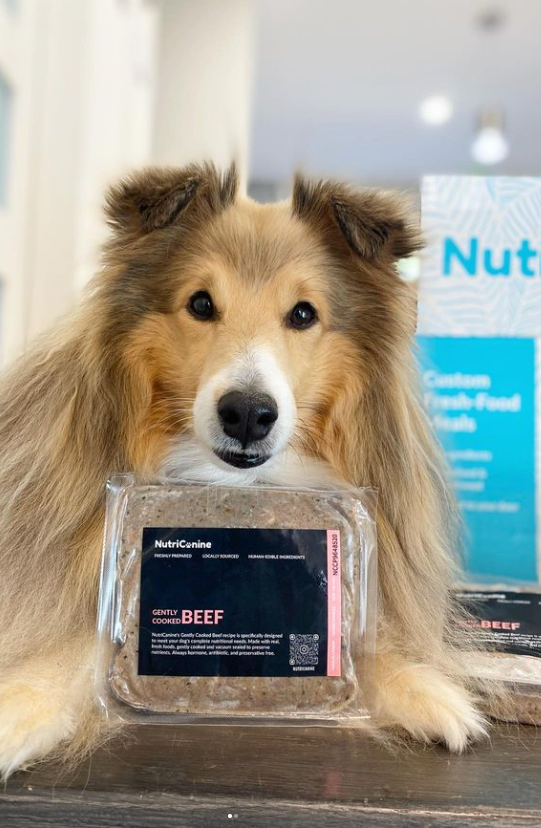
Tucker's puppy friend Pearl was visiting for a few days and she was begging to get in on the Taste Testing fun.
NutriCanine Is Formulated for All Life Stages
NutriCanine fresh dog food is designed from the ground up to support dogs throughout every stage of life, from growing puppies to active adults and into the golden senior years. Instead of offering separate products for puppy and adult formulas, NutriCanine focuses on a balanced, whole‑food approach that delivers the nutrients dogs need whether they are building, maintaining, or sustaining their bodies.
Formulating a diet that truly supports all life stages means more than just hitting basic minimums. NutriCanine meals start with high‑quality, digestible proteins that support muscle development and maintenance, healthy fats for energy and cognitive development, and carefully selected carbohydrates for steady fuel without unnecessary fillers. Each recipe includes essential vitamins and minerals at levels that support healthy bone growth in puppies, lean body condition in adults, and sustained vitality in seniors.
Because NutriCanine meals are fully balanced and nutritionally complete for all life stages, you do not need to transition your dog from one formula to another as they age. This simplifies feeding routines and helps reduce stress on the digestive system that can sometimes accompany diet changes. Puppies can thrive on the same recipe as adults because the nutrient profile supports both healthy growth and lifelong maintenance. For multi‑dog households, this means one formula can meet the needs of dogs of different ages without compromise.
NutriCanine also prioritizes ingredient quality and digestibility, which helps ensure nutrients are absorbed and used effectively at every life stage. By focusing on whole foods and avoiding fillers and artificial additives, the diet supports immune health, skin and coat condition, and overall wellbeing from puppyhood well into later life.
Feeding NutriCanine all‑life‑stages food gives owners confidence that their dog’s nutritional foundation is solid, consistent, and tailored to support health and vitality without the need for frequent formula switches.

Choosing the Right Food for Your Dog
When selecting puppy or adult dog food, look for the following:
-
AAFCO Certification: Ensures the food meets minimum nutrient requirements for growth or maintenance.
-
High-Quality Ingredients: Lean meats, healthy fats, digestible carbohydrates, and whole foods are ideal.
-
Breed and Size Considerations: Choose formulas appropriate for your dog’s size and growth rate.
-
Life Stage Formula: Puppy, adult, and senior formulas are formulated for specific needs.
Final Thoughts
Feeding your dog appropriately for their life stage is crucial. Puppies need nutrient-dense diets that support growth, while adult dogs require balanced nutrition to maintain health and prevent obesity. Understanding the differences between puppy and adult dog food helps prevent common health problems and ensures your dog lives a long, healthy, and happy life.
Remember, nutrition is not one-size-fits-all. Consider your dog’s breed, size, activity level, and any special health needs when choosing food. Consulting with a veterinarian or pet nutritionist can help you make the best decisions for your furry friend.
By feeding your dog the right diet at the right stage of life, you’re giving them the foundation for a lifetime of health, energy, and vitality.