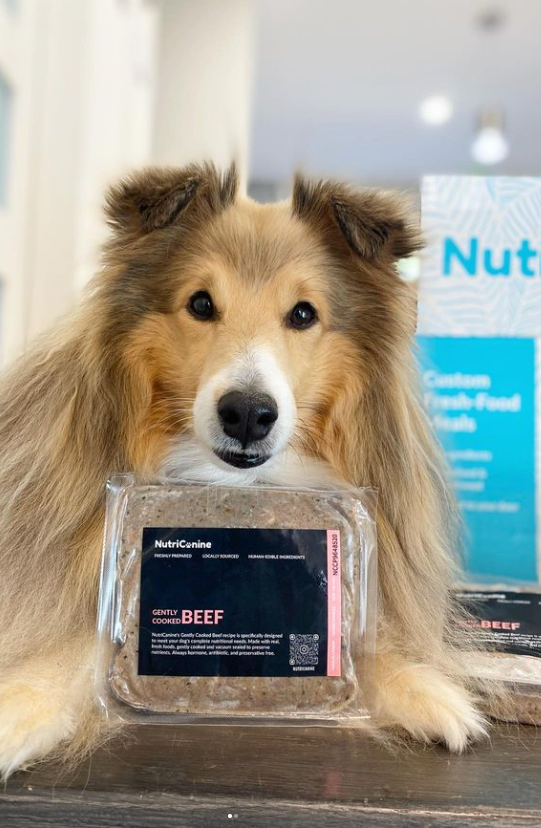
“I have three pups, all picky eaters, and they devoured their meals! I’m so happy to have found a quick, easy and super healthy food.”
 Verified Purchase
Fresh Cooked vs. Freeze Dried Dog Food: What's Actually Best for Your Dog?
Fresh Cooked vs. Freeze Dried Dog Food: What's Actually Best for Your Dog?
Walk into any pet store today, and you'll be met with an overwhelming number of options: kibble, raw, canned, freeze dried dog food, fresh cooked, and everything in between. It's a lot to navigate, especially when all you want is to feed your dog well.
Two options that often end up in the same conversation are fresh cooked dog food and freeze dried dog food. Both are marketed as premium, minimally processed alternatives to traditional kibble. But are they actually comparable? And which one is the better choice for your dog's long-term health?
In this post, we break it all down: how each type is made, what the research says about nutrition and digestibility, the safety trade-offs, and what it all costs. If you've already read our overview on fresh cooked vs. raw dog food, this is a great companion piece to help you see the full picture.
What Is Freeze Dried Dog Food?
Freeze dried dog food is made by taking raw or lightly cooked ingredients and removing nearly all of their moisture through a process called lyophilization. The food is frozen first, then placed in a vacuum chamber where the ice turns directly into vapor without passing through a liquid stage. The result is a shelf-stable product that retains much of its original structure.
Because the process doesn't use high heat, freeze dried food is often marketed as being close to raw in terms of nutritional profile. And in many ways, that's true. But there's an important distinction between being minimally processed and being nutritionally complete or microbiologically safe.

What Is Fresh Cooked Dog Food?
Fresh cooked dog food (also called gently cooked dog food) is made from whole-food ingredients that are lightly cooked at low temperatures, then portioned and refrigerated or frozen. Think real chicken, turkey, fish, vegetables, and whole grains, prepared in a way that resembles how you might cook a balanced meal at home.
The gentle cooking process serves two purposes: it reduces the risk of harmful bacteria like Salmonella and Listeria, and it can actually improve the digestibility of certain nutrients. Research has found that lightly cooked protein is often more bioavailable than raw protein for dogs. We cover the longevity connection in more detail in our post on how fresh food could help your dog live longer.

How Do They Compare? A Side-by-Side Look
Here's a high-level comparison across the factors that matter most to most dog owners:
Nutrition: What Does the Science Actually Say?
This is where things get nuanced, and where a lot of marketing language falls short.
Protein and Digestibility
Both fresh cooked and freeze dried diets can deliver high-quality protein. However, cooking protein at low temperatures actually increases its digestibility for most dogs. This is because heat partially "unfolds" protein structures, making it easier for digestive enzymes to break them down.
Freeze dried food preserves the raw protein structure, which can still be highly digestible, but it's not necessarily superior to gently cooked. The idea that raw or freeze dried protein is inherently more bioavailable than cooked is a common misconception.
Vitamins and Heat Sensitivity
Some vitamins, particularly Vitamin C and certain B vitamins, are sensitive to heat. Freeze dried food has an advantage here because the absence of heat preserves more of these heat-sensitive nutrients. However, reputable fresh cooked brands account for nutrient loss during cooking by adjusting their formulas, and often add back vitamins to ensure the final product meets AAFCO standards.
Moisture and Hydration
Fresh cooked food has a naturally high moisture content, similar to whole foods. This contributes to hydration and can support kidney and urinary tract health. Freeze dried food, on the other hand, has had almost all of its moisture removed. While you can (and should) rehydrate freeze dried food before serving, it still may not reach the same moisture level as fresh. Dogs on dry diets, including freeze dried, may need to compensate with extra water intake. If digestive health is a concern, check out our post on probiotics and digestive support for dogs.

Safety: What You Need to Know
This is one of the biggest differentiators between these two food types.
Fresh Cooked Dog Food Safety
Gentle cooking kills harmful pathogens including Salmonella, Listeria, and E. coli. For households with young children, elderly individuals, or immunocompromised family members, this is a meaningful advantage. It also reduces the risk of cross-contamination during food handling.
Freeze Dried Dog Food Safety
Because freeze drying doesn't use heat, pathogens present in raw ingredients can survive the process. The FDA has documented recalls of freeze dried and raw pet foods due to Salmonella and Listeria contamination. The freeze drying process reduces moisture, which inhibits bacterial growth, but does not eliminate the risk entirely.
There's also the issue of heavy metal contamination in some commercial diets. An independent study on heavy metals in popular dog foods found elevated levels in several products, highlighting why ingredient sourcing and third-party testing matter regardless of the food type you choose.

Cost Comparison: Fresh Cooked vs. Freeze Dried
Both fresh cooked and freeze dried foods sit at the premium end of the pet food market. But freeze dried generally comes at a higher price per calorie, partly because the equipment required for freeze drying is expensive, and partly because many freeze dried products use high-quality, human-grade ingredients.
Fresh cooked dog food, particularly from subscription-based brands, can offer better value per calorie, especially for larger dogs. That said, some freeze dried products are designed to be used as toppers rather than complete meals, which changes the cost equation.
Convenience: Honest Trade-Offs
Fresh Cooked
-
Requires refrigeration or freezer space
-
Shorter shelf life once opened (typically 3-5 days refrigerated)
-
Can be portioned easily for accurate feeding
-
No rehydration needed, serve straight from the fridge
Freeze dried
-
Excellent for travel or camping
-
Long shelf life (1-2+ years unopened)
-
Lightweight and easy to store in bulk
-
Requires rehydration for best results, which adds a step
-
Can be used as a meal topper on other food types
For picky eaters, both options tend to be more palatable than kibble. We have a full guide on getting picky dogs to eat their meals if that's a challenge you're navigating.
If your dog has specific health needs like IVDD, pancreatitis, or weight management, diet choice becomes even more critical. See our guides on best food for dogs with IVDD and fresh food for dogs with pancreatitis for condition-specific guidance.
What About Omega-3s and Skin Health?
Both food types can be formulated to include omega-3 fatty acids from sources like salmon, sardines, or flaxseed. However, omega-3s (particularly EPA and DHA) are sensitive to oxidation. Freeze drying preserves them well because there's no heat, but improper storage of freeze dried food can lead to rancidity. Fresh cooked food, when stored properly in the fridge or freezer, also preserves omega-3 content well. We've written a detailed post on natural omega-3 sources for dogs worth bookmarking.
The NutriCanine Difference
At NutriCanine, we believe dogs thrive on food that looks and smells like real food, abecause it is real food. Our gently cooked recipes are made from human-grade ingredients, cooked at low temperatures to preserve nutrients while eliminating hermful bacteria.
Every recipe is formulated to meet AAFCO nutritional standards for complete and balanced feeding. No fillers, no mstery meals, no compromises on safety.
Whether you're transitioning from freeze dried food, kibble, or raw, NutriCanine makes it easy to step up to fresh, without the guesswork.
Curious about whether a home-prepared diet can achieve the same balance? Read our take on whether home-prepared diets are truly complete for context.

Recommendation From a Pet Nutritionist
Hi, I'm Andrea Geiger, MSc., Director of Nutrition at NutriCanine. This is a question I get asked constantly, and honestly, I love it, because it tells me a dog owner is paying attention.
Here's what I tell most of my clients: freeze dried dog food is a great product, but it isn't automatically the better product. The "closer to raw is always better" narrative has become so pervasive in the pet food world that it's started to cloud some pretty important nuances.
When I'm evaluating a diet for a dog, I'm looking at four things: nutrient completeness, digestibility, pathogen safety, and how well the food fits into that family's real daily life. Freeze dried food can score well on the first two. It often falls short on the third, and it's genuinely expensive to feed as a complete diet long-term.
Fresh cooked food, when it's formulated properly and made from quality ingredients, checks all four boxes. The gentle cooking process isn't a compromise. It's actually an advantage. Lightly cooking protein improves digestibility, eliminates bacterial risk, and preserves moisture in a way that supports hydration and gut health. For most dogs, most of the time, that's the better foundation.
That said, I'm not here to tell you freeze dried has no place in your dog's bowl. I recommend it regularly as a topper, a travel option, or a palatability boost for picky eaters. Used that way, it's a fantastic tool.
What I'd caution against is choosing a food based on marketing language alone. "Minimally processed" and "raw-inspired" sound compelling, but they don't tell you whether the food is complete, balanced, or safe. Those are the questions worth asking.
If you're unsure where to start, I'm always happy to help. Nutrition doesn't have to be complicated, and your dog doesn't have to settle for less.
Andrea Geiger, MSc. Director of Nutrition, NutriCanine
Common Questions (And Honest Answers)
Is freeze dried dog food the same as raw?
Not exactly. Freeze dried food starts with raw ingredients, but the moisture removal process changes the texture and may affect certain nutrient concentrations. It shares some of raw's benefits (minimal processing, preserved enzymes) and some of its risks (potential pathogen survival).
Can I use freeze dried food as a topper on fresh cooked food?
Yes, and this is a popular approach. Using freeze dried food as a topper on a fresh cooked base can add variety and palatability without significantly increasing pathogen risk, as the base meal is already cooked.
Is gently cooked dog food the same as homemade dog food?
No. Commercially prepared gently cooked dog food is formulated to meet AAFCO nutrient profiles and goes through quality testing. Homemade diets, even well-intentioned ones, frequently fall short of meeting your dog's complete nutritional needs. Research consistently shows this. For more on that topic, see our post on home-prepared diets.
The Bottom Line
Both fresh cooked dog food and freeze dried dog food are meaningful upgrades from standard kibble. But they're not the same product, and the right choice depends on your dog's health, your lifestyle, and your budget.
If safety, digestibility, hydration, and cost-effectiveness are your top priorities, fresh cooked is the stronger option for day-to-day feeding. If you need a shelf-stable food for travel or want a high-quality meal topper, freeze dried has a solid role to play.
What matters most is that the food you choose is complete and balanced, made from quality ingredients, and sourced from a brand that's transparent about how it's made. If you're weighing your options and want to understand how other specialized diets compare, our guide on prescription and therapeutic dog foods is a helpful next read.
Ready to try fresh? NutriCanine's gently cooked meals are a great place to start. Your dog's bowl is waiting.