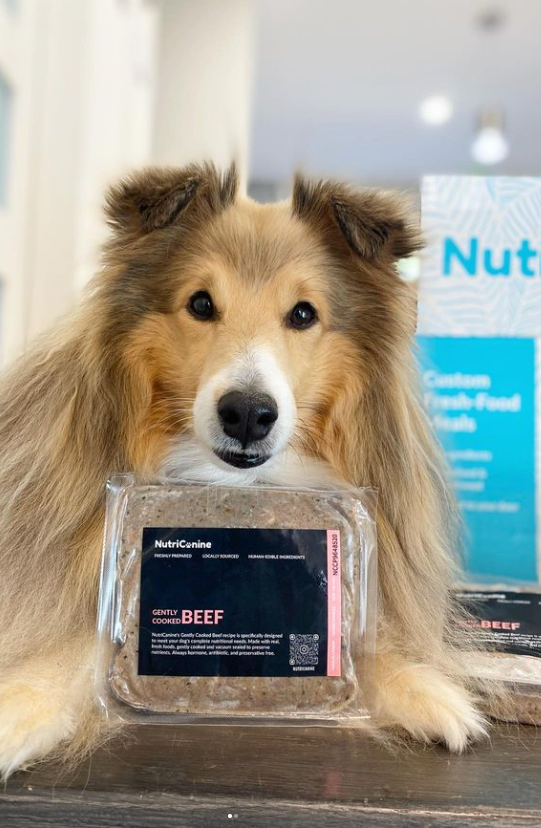
“I have three pups, all picky eaters, and they devoured their meals! I’m so happy to have found a quick, easy and super healthy food.”
 Verified Purchase
Cost-Effective Ways to Cook for Your Dog
Cost-Effective Ways to Cook for Your Dog
If you've noticed your grocery bill creeping up at the pet food aisle lately, you're not alone. Commercial dog food prices have risen significantly over the past few years, and many Canadian pet owners are starting to wonder whether cooking for their dogs at home might be a smarter, more affordable option.
The good news is that homemade dog food can absolutely support a long, healthy life for your dog. The challenge is that creating meals that are truly complete and balanced is far more complex than it might seem. Without the right nutritional foundation, you can end up spending more money trying to correct deficiencies than you would have spent on a quality commercial diet in the first place.
This article walks you through ten practical, cost-effective ways to cook for your dog, common nutritional pitfalls to avoid, and how NutriCanine helps pet parents take the guesswork out of fresh feeding entirely.

Why Pet Parents Are Turning to Homemade Dog Food
The shift toward homemade dog food is driven by more than just cost. Pet owners today are more informed, more curious, and more intentional about what goes into their dogs' bowls.
Here are some of the most common reasons people explore homemade feeding:
• Rising cost of commercial pet food: Premium kibble and fresh-food subscriptions have become a significant monthly expense for many households.
• Ingredient transparency: Many owners want to know exactly what their dogs are eating, without decoding an ingredient list full of unfamiliar additives.
• Concerns about processing and quality: An independent study found traces of heavy metals and contaminants in several popular commercial dog foods, which has pushed some owners to seek fresher alternatives. You can read more about those findings in this
• Tailoring food to individual dogs: Dogs with allergies, sensitivities, or health conditions often benefit from customized diets. Whether you're managing a dog with pancreatitis, digestive issues, or a
• Appeal of fresh, whole ingredients: There's a growing body of evidence suggesting that fresh, minimally processed food may offer real health advantages for dogs.

The Hidden Costs of Homemade Dog Food
Here's where many well-intentioned pet owners run into trouble. Homemade feeding looks affordable on the surface, but without a solid plan, the costs can quietly add up.
Buying Ingredients Without a Plan
Purchasing proteins, vegetables, and supplements without a clear recipe often leads to overbuying, ingredient duplication, and unnecessary food waste. A batch of chicken thighs that doesn't get used in time, or a bag of supplements that sits unused after you switch recipes, represents money down the drain.
Nutritional Imbalances That Lead to Vet Bills
This is the hidden cost that hurts most. A dog fed an imbalanced diet for months or years can develop health problems, from bone density issues caused by calcium deficiency to coat and skin problems from inadequate omega fatty acids. Treatment is far more expensive than prevention. The essential nutrients your dog needs are not always intuitive, and getting them right consistently requires real nutritional knowledge.
The most cost-effective approach to homemade feeding is one that starts with a nutritionally complete, balanced recipe. Everything else follows from that foundation.

10 Cost-Effective Ways to Cook for Your Dog
1. Buy Proteins in Bulk
Proteins like chicken thighs, ground turkey, beef, and salmon are significantly cheaper when purchased in bulk. Look for family packs or wholesale options at stores like Costco, local butchers, or ethnic grocery stores in your area.
Practical tip: Divide bulk proteins into weekly portions, portion them into freezer bags, and freeze immediately. This reduces both cost and the risk of spoilage.
Pitfall to avoid: Buying more than you can realistically use before the freeze date, or choosing proteins that don't fit your dog's specific dietary needs. For dogs with fat sensitivities, for example, very lean proteins like turkey or white fish may be more appropriate. You can explore fresh food options for dogs with pancreatitis for guidance on protein selection.
3. Incorporate Affordable Nutrient-Dense Ingredients
Some of the most nutritious ingredients for dogs are also among the most affordable. Eggs, for example, are an excellent source of high-quality protein and healthy fats. Canned fish like sardines (in water, not oil or salt) provide a rich source of omega-3 fatty acids at a fraction of the cost of fresh salmon.
Other budget-friendly, nutrient-dense options include:
• Chicken liver (rich in vitamin A, B vitamins, and iron)
• Lentils (fibre and plant-based protein when used appropriately)
• Oats (easy-to-digest carbohydrate for active dogs)
Pitfall to avoid: Organ meats like liver are nutritious but should be fed in small amounts. Too much liver can lead to vitamin A toxicity. Balance is everything.
4. Batch Cook and Freeze Meals
Cooking in large batches is one of the most effective ways to save both time and money. Preparing a week's worth of meals in one session reduces energy costs, minimizes prep time, and makes it easier to stay consistent with your dog's diet.
Practical tip: Use a large slow cooker or stockpot to prepare a big batch of protein and vegetables at once. Portion into daily servings, refrigerate what will be used within three to four days, and freeze the rest.
Pitfall to avoid: Freezing improperly portioned meals makes it harder to thaw the right amount and can lead to overfeeding or underfeeding. Invest in a kitchen scale to portion accurately before freezing.
5. Reduce Food Waste by Using Safe Leftovers
Some safe, unseasoned human food leftovers can be incorporated into your dog's meals to reduce household waste. Plain cooked proteins, unseasoned rice, cooked vegetables, and plain scrambled eggs are all reasonable additions.
Practical tip: Set aside a portion of your own meal prep before adding seasonings, sauces, or other ingredients that are not safe for dogs.
Pitfall to avoid: Never feed leftovers that contain onion, garlic, high-fat sauces, artificial sweeteners like xylitol, or bones that may splinter. When in doubt, leave it out.
6. Plan Meals in Advance
Meal planning is one of the most underestimated tools for saving money on homemade dog food. Without a plan, you end up making reactive decisions at the grocery store, buying more than you need, or scrambling for substitutes when ingredients run out.
Practical tip: Sit down once a week and plan your dog's meals alongside your own grocery list. This way, you can identify opportunities to share ingredients (for example, if you're buying a whole chicken for your family, you can use the bones for broth and the trimmings for your dog's meals).
Pitfall to avoid: Meal planning only works when it's grounded in a nutritionally complete recipe. Planning meals from an unbalanced recipe just means repeating the same nutritional mistake consistently.
7. Purchase Ingredients From Local Suppliers
Local butchers, farmers' markets, and ethnic grocery stores often sell proteins and vegetables at lower prices than major chain supermarkets. You can sometimes negotiate pricing on bulk orders or purchase cuts that are less popular with human customers but perfectly suitable for dogs, such as chicken backs, beef heart, or pork shoulder.
Practical tip: Introduce yourself to your local butcher and ask about off-cuts or bulk pricing. Many butchers are happy to set aside specific quantities for regular customers.
Pitfall to avoid: Variety is important, but always make sure any new ingredient is appropriate for dogs before adding it to the rotation.
8. Use a Nutritionally Balanced Recipe
This is the single most important tip on this list. Everything else is secondary to starting with a recipe that has been formulated to meet your dog's nutritional requirements. A balanced recipe tells you exactly which ingredients to buy, in what quantities, and which supplements are necessary. This eliminates guesswork, prevents overspending on unnecessary supplements, and reduces the risk of costly nutritional mistakes.
Research consistently shows that home-prepared dog diets are frequently incomplete or imbalanced when built from recipes found online or in popular books. This is not a reason to avoid homemade feeding. It is a reason to use recipes developed by qualified nutrition professionals.
9. Portion Meals Accurately
Overfeeding wastes food and money, and can lead to weight gain and associated health problems. Underfeeding results in nutritional shortfalls. Both outcomes are expensive in different ways.
Practical tip: Calculate your dog's daily caloric needs based on their weight, age, and activity level, and use a kitchen scale to weigh meals accurately rather than estimating by eye.
Pitfall to avoid: Portioning recommendations for homemade diets are not the same as for commercial kibble. A homemade diet has a much higher moisture content, so the serving size will look very different from what you're used to.
10. Compare Fresh Food Subscriptions to DIY Costs
It's worth running the actual numbers before committing to a fully DIY approach. Factor in the cost of ingredients, supplements, your time, and the risk of imbalance when comparing homemade feeding against a fresh food subscription like NutriCanine.
For some households, a fresh food service that provides nutritionally complete, portioned meals is genuinely more economical once all costs are accounted for. For others, a hybrid approach (using NutriCanine for some meals and supplementing with homemade on other days) may strike the right balance. You might also explore food toppers as a way to enhance a commercial base without committing to a fully homemade approach.

Common Nutritional Mistakes When Cooking for Dogs
Even the most motivated, well-researched pet owners make nutritional mistakes when cooking for their dogs. Here are the most common ones:
Calcium Deficiency
This is the most frequently occurring deficiency in home-cooked diets. Muscle meat is very low in calcium, and without a calcium source (such as ground eggshell, bone meal, or a calcium supplement), dogs can develop serious skeletal problems over time. Puppies and large breeds are especially vulnerable.
Improper Protein-to-Fat Ratios
The ratio of protein to fat in your dog's diet matters, particularly for dogs with health conditions. A diet too high in fat can cause or worsen pancreatitis. A diet too low in fat may leave your dog's skin and coat dull and dry. Understanding how to choose appropriate fat levels for your individual dog is an important part of formulation.
Missing Vitamins and Minerals
Vitamins D, E, B12, zinc, and iodine are among the nutrients most commonly deficient in home-cooked dog diets. These gaps don't show up immediately but accumulate over time, leading to health problems that can be expensive and difficult to reverse. A thorough overview of essential nutrients for dogs is a helpful starting point for any owner considering homemade feeding.
Relying on Unverified Recipes Found Online
The internet is full of homemade dog food recipes. Most of them have never been nutritionally analyzed. A recipe that looks healthy, uses whole ingredients, and has thousands of positive reviews can still be critically deficient in key nutrients. This is not a niche concern; it is a well-documented issue in peer-reviewed research.

A Note From a Pet Nutritionist
"Many pet parents are surprised to discover that the most expensive part of homemade feeding is often the cost of correcting nutritional mistakes further down the road. A dog that develops calcium deficiency, poor coat condition, or chronic digestive issues after months on an imbalanced diet will need veterinary attention, diagnostic testing, and potentially long-term management. That adds up quickly, and it's entirely avoidable.
The most cost-effective approach to homemade feeding is one that starts with a balanced, professionally formulated recipe that accounts for your dog's specific life stage, size, and health status. When every ingredient you purchase has a purpose and contributes to meeting your dog's nutritional requirements, nothing is wasted. Not money, not effort, and not your dog's health.
The goal isn't just to feed your dog at home. It's to feed them well. Those two things aren't always the same without the right nutritional foundation underneath them.”
Director of Nutrition, NutriCanine
How NutriCanine Takes the Guesswork Out of Homemade Feeding
NutriCanine was built specifically for pet parents who want the benefits of fresh, home-style feeding without the complexity and risk of doing it alone.
Here's what NutriCanine brings to the table:
• Recipes developed by pet nutrition experts: Every NutriCanine meal plan is formulated to meet established nutritional standards for your dog's specific life stage and size.
• Accurate portion calculations: No more guessing how much to feed. NutriCanine accounts for your dog's weight, age, and activity level to provide precise daily serving sizes.
• Complete and balanced nutrition in every meal: Unlike many online recipes, NutriCanine meals are formulated to include all essential vitamins and minerals, including the micronutrients that home cooks most commonly miss.
• Elimination of costly supplementation guesswork: Because the recipes are complete, you don't need to purchase a cabinet full of individual supplements and figure out which ones to use.
• Time savings: Meal planning and formulation is handled for you, so you can focus on feeding your dog rather than researching nutrition.
• Reduced risk of expensive nutritional mistakes: The most significant financial benefit of using NutriCanine is the cost you avoid, in veterinary bills, supplements, and wasted ingredients.
Whether you're considering fresh food for the first time or looking for a more structured approach to homemade feeding, NutriCanine offers a genuinely smarter way forward. You might also find it useful to compare NutriCanine's approach against fresh-cooked versus raw diets or fresh-cooked versus freeze-dried options to determine the best fit for your household.

Is Homemade Dog Food Really Cheaper?
The honest answer is: it depends.
Here's a realistic comparison:
DIY homemade feeding can absolutely be the more affordable option when done correctly. The key phrase is done correctly. That means starting with a complete, balanced recipe; sourcing ingredients strategically; and being consistent. For many pet parents, partnering with NutriCanine (even part-time) is the most reliable way to achieve that standard without investing years in nutritional education.
If you are weighing your options, it can also be worth reading through some of the common dog food myths that influence how people think about cost and quality in pet nutrition.
Conclusion
Cooking for your dog at home can be one of the most loving, health-supportive choices you make as a pet owner. It can also be more affordable than you might think, when approached strategically.
The ten tips in this article give you a practical framework for reducing costs without sacrificing quality. Buy in bulk. Use seasonal produce. Batch cook. Minimize waste. Plan ahead. But above all, start with a nutritionally complete, balanced recipe. That one decision protects both your dog's health and your wallet more than any other.
NutriCanine makes it possible to enjoy all the benefits of fresh, homemade-style feeding without the stress of figuring it all out on your own. Every meal plan is developed by certified nutrition professionals, portioned for your dog's specific needs, and formulated to meet complete and balanced nutritional standards.
Ready to make the switch to smarter, fresher feeding? Explore NutriCanine's personalized fresh food plans and discover just how easy balanced nutrition can be when the experts have already done the hard work for you.
Frequently Asked Questions
How much does it cost to cook homemade dog food per day?
The daily cost of homemade dog food varies widely depending on your dog's size, the ingredients you choose, and whether you factor in supplements. For a medium-sized dog (around 25 kg), you might spend anywhere from $3 to $8 per day on ingredients alone. However, supplements, kitchen time, and the risk of nutritional errors can push the real cost considerably higher. A fresh food subscription like NutriCanine may be comparable or more economical once all factors are accounted for.
Is homemade dog food actually healthier than kibble?
Fresh, minimally processed food can offer real nutritional advantages over highly processed kibble, including better digestibility and higher moisture content. That said, a poorly formulated homemade diet is not healthier than a well-formulated commercial diet. The quality of any diet (homemade or commercial) comes down to whether it meets your dog's complete nutritional requirements. You can explore the research on fresh food and longevity in dogs in this article on whether feeding fresh food could help your dog live longer.
What nutrients are most commonly missing from homemade dog food?
Calcium, vitamin D, zinc, iodine, and certain B vitamins are among the most frequently deficient nutrients in home-prepared dog diets. Calcium is particularly important and is almost always insufficient in recipes built around muscle meat without a dedicated calcium source. These deficiencies may not show obvious symptoms immediately but can cause serious health problems over time.
Can I use human food leftovers to feed my dog?
Some plain, unseasoned human food leftovers are safe and appropriate for dogs, including plain cooked proteins, unseasoned cooked vegetables, and plain grains like rice or oats. You should never feed your dog leftovers that contain onion, garlic, artificial sweeteners like xylitol, high-fat sauces, cooked bones, or alcohol. When in doubt about a specific ingredient, consult a qualified animal nutritionist or veterinarian before including it.
How do I know if my homemade dog food recipe is nutritionally complete?
The most reliable way to confirm a recipe is nutritionally complete is to have it analyzed by a certified companion animal nutritionist. Many popular recipes circulating online have never been formally analyzed and are known to fall short of established nutritional standards. Look for recipes developed by credentialed nutrition professionals, or work with a service like NutriCanine that builds complete and balanced formulations as the starting point for every meal plan.