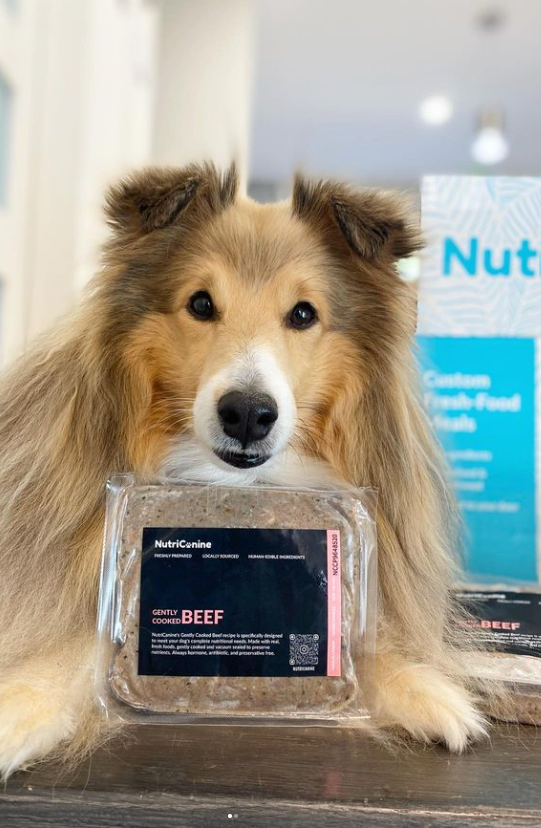
“I have three pups, all picky eaters, and they devoured their meals! I’m so happy to have found a quick, easy and super healthy food.”
 Verified Purchase
Common Dog Food Myths Debunked
Common Dog Food Myths Debunked
If you've spent any time researching dog nutrition online, you've probably walked away more confused than when you started. One source says grain-free is essential. Another says raw food is the gold standard. A third warns you away from by-products while a fourth insists kibble is perfectly fine. It's a lot.
Here's the truth: much of the dog food advice circulating online is based on outdated science, marketing spin, or simple misunderstandings about how dogs actually digest and use nutrients. Canine nutrition is a legitimate scientific field, and the gap between what the research says and what shows up on pet food blogs or social media can be significant.
This guide is here to help. We're going to walk through eight of the most common dog food myths, explain what the science actually says, and give you the grounded, practical knowledge you need to make better decisions for your dog.

Myth 1: Dogs Should Only Eat Kibble
Kibble became the dominant form of commercial dog food in North America after World War II, largely for practical reasons. It was shelf-stable, easy to mass produce, and convenient for pet owners. Over time, "dry kibble" became synonymous with responsible dog feeding, to the point where many owners assume it's the only appropriate choice.
That's a myth worth unpacking.
Kibble is produced through a process called extrusion, where ingredients are cooked under high heat and pressure. This can compromise some heat-sensitive nutrients, including certain vitamins and amino acids, which are often added back in synthetic form after processing. Kibble is also very low in moisture, typically around 8 to 10%, which is quite different from the natural moisture content of whole foods.
This doesn't make kibble "bad." A well-formulated kibble can absolutely meet your dog's nutritional needs. But it does mean kibble is not automatically superior to other feeding options, and it's not the only way to nourish a dog well.
Fresh, gently cooked dog food has grown significantly in both popularity and scientific credibility. Research on digestibility shows that minimally processed fresh food can have higher bioavailability of certain nutrients. Dogs also tend to find fresh food more palatable, which matters for picky eaters or dogs with reduced appetite.
The key in any diet, kibble or otherwise, is proper formulation. A fresh meal plan built on sound nutrition science and complete ingredient profiles can be an excellent choice for many dogs.

Myth 2: Grain-Free Diets Are Always Healthier
The grain-free dog food trend took off in the mid-2000s, driven by the idea that grains are "unnatural" or harmful to dogs. This was partly inspired by grain-free human diets becoming popular, and partly by a misunderstanding of what dogs actually need.
Here's what the science tells us: grains are not inherently bad for dogs.
Dogs have evolved alongside humans for thousands of years and have developed digestive adaptations that allow them to process carbohydrates relatively well. Unlike cats, which are obligate carnivores, dogs produce salivary amylase (an enzyme that begins carbohydrate digestion) and have multiple copies of the amylase gene, reflecting a real biological adaptation to starch digestion.
Whole grains like oats, brown rice, and barley provide digestible energy, fiber that supports gut health, and a range of micronutrients. When well-prepared and included at appropriate levels, they are a legitimate part of a balanced canine diet.
Food sensitivities are real, but it's important to know that they are far more commonly linked to proteins, particularly beef, chicken, dairy, and wheat gluten, rather than to grains as a category. If your dog has a diagnosed food sensitivity, the answer is identifying the specific trigger, not blanket grain elimination.
The bottom line: grain-free is not automatically better, and grain-inclusive is not automatically worse. What matters is the quality of the overall formulation.

By-Products Are Always Bad
"No by-products" is a common marketing claim on premium pet food packaging, and it has led many owners to assume that by-products are low-quality fillers or waste products. The reality is more nuanced.
By-products in pet food refer to parts of the animal other than skeletal muscle meat. This includes organs like liver, kidney, spleen, and lung, as well as other edible tissues. In many cases, these ingredients are genuinely nutritious.
Organ meats, for example, are among the most nutrient-dense foods you can include in a dog's diet. Liver is exceptionally high in vitamin A, B vitamins, and iron. Kidney provides high-quality protein. Many traditional diets around the world prioritize organ meats for exactly this reason.
The distinction that actually matters is not "by-product vs. no by-product." It's the quality and sourcing of those ingredients. A named, high-quality organ meat (like "chicken liver") included at appropriate levels is very different from unnamed, low-grade by-product meal of unclear origin included primarily as a cheap protein source.
When evaluating a dog food, look for specific named ingredients, transparent sourcing, and a complete nutritional profile rather than relying on marketing claims about what's excluded.

Myth 4: Raw Food Is Always Better
Raw feeding has a passionate following, and there are legitimate reasons some dogs do well on carefully constructed raw diets. But the idea that raw food is universally better than cooked food is one of the more persistent canine nutrition myths, and it's worth examining carefully.
The argument for raw feeding is typically that cooking destroys nutrients and that raw food more closely resembles what ancestral dogs ate. These points have some merit but also important limitations.
On the nutrient side, gentle cooking (as opposed to high-heat extrusion) does not significantly degrade most proteins, fats, or minerals. Some heat-sensitive vitamins are reduced, but a properly formulated recipe accounts for this.
The more significant concern with raw food is food safety. Raw meat can harbor pathogens including Salmonella, Listeria, Campylobacter, and E. coli. While healthy adult dogs have a fairly robust digestive system, they can still become carriers of these pathogens and shed them in their feces, creating a real public health consideration, particularly in households with young children, elderly individuals, or immunocompromised people.
Gently cooked fresh food offers a compelling middle ground. It retains much of the nutritional integrity of fresh, whole ingredients while eliminating pathogen risk through safe cooking temperatures. It's a science-backed approach that prioritizes both dog health and household safety.
If you're drawn to raw feeding, work with a board-certified veterinary nutritionist to ensure the diet is complete, balanced, and handled safely. Raw feeding done poorly, with unbalanced recipes and unsafe handling, can cause real harm.

Myth 5: Dogs Are Carnivores and Don't Need Carbohydrates
This myth often comes packaged with the idea that feeding carbohydrates to dogs is biologically inappropriate. Dogs, the argument goes, evolved to eat meat, so carbs are either unnecessary or actively harmful.
Dogs are not strict carnivores. They are classified as omnivores, and the scientific evidence supports this.
Genomic research has identified key differences between wolves and domestic dogs, including the number of copies of the AMY2B gene, which produces the enzyme needed to digest starch. Dogs have significantly more copies of this gene than wolves, a direct adaptation to thousands of years of coexisting with carbohydrate-consuming humans.
This doesn't mean dogs need high amounts of carbohydrates, or that all carbohydrate sources are equal. But it does mean that digestible carbohydrates like sweet potato, squash, peas, and potatoes can serve a legitimate role in a balanced canine diet. They provide accessible energy, dietary fiber that supports the gut microbiome, and in some cases, important phytonutrients.
The goal is appropriate balance, not carbohydrate elimination. A well-designed diet considers the type, amount, and digestibility of every macronutrient, including carbohydrates.
Are Dogs OMNIVORES or CARNIVORES?
Myth 6: All Dog Foods Are Nutritionally Complete
Walk down any pet food aisle and almost every product claims to be "complete and balanced." So does that mean they're all equally nutritious? Not quite.
In Canada and the United States, commercial pet foods that claim to be complete and balanced must meet standards set by AAFCO (the Association of American Feed Control Officials), or in Canada, be registered under Health Canada's Veterinary Health Products framework if they include functional ingredients. These standards define minimum (and in some cases maximum) levels for a range of nutrients.
Meeting minimums is a starting point, not a finish line.
Two foods can both technically meet AAFCO nutrient profiles while differing dramatically in ingredient quality, digestibility, and bioavailability. A nutrient listed on a guaranteed analysis panel is not the same as a nutrient your dog can actually absorb and use. The bioavailability of nutrients varies significantly depending on the ingredient source and how the food is processed.
For example, plant-based protein sources can have different amino acid profiles than animal-based proteins, and some are less digestible for dogs. The form a vitamin takes matters. The quality of the fat source matters. These details don't always show up on a label.
This is why formulation expertise matters as much as ingredient sourcing. A truly high-quality dog food is designed not just to meet minimums on paper, but to deliver nutrients in forms that dogs can efficiently absorb and use.

Myth 7: Expensive Dog Food Is Automatically Better
Price is often used as a proxy for quality, and while it's true that high-quality ingredients and proper formulation come with costs, the relationship between price and nutritional quality is not straightforward.
Premium pricing can reflect genuine factors like sourcing standards, ingredient quality, small-batch production, rigorous testing, or formulation by credentialed nutritionists. But it can also reflect marketing spend, premium packaging, celebrity endorsements, or simply charging more for a trendy positioning.
What actually determines the quality of a dog food:
- Formulation by qualified professionals (veterinary nutritionists or animal nutritionists with recognized credentials)
- Transparent ingredient sourcing
- Testing protocols, including nutrient analysis and safety testing
- Appropriate inclusion levels, not just the presence of a "superfood" ingredient
- Honest, evidence-based claims
A mid-priced food formulated by a veterinary nutritionist with robust quality control may serve your dog better than an expensive boutique product built more on branding than nutritional science.
Ask questions of the brands you trust: Who formulated this diet? What testing do you conduct? Can I see your nutrient analysis? The answers tell you far more than the price tag.
Myth 8: "Natural" and "Holistic" Have Strict, Meaningful Definitions
These terms appear on dog food packaging constantly, and they sound reassuring. Unfortunately, neither has a tightly regulated legal definition in the pet food space.
"Natural" in AAFCO guidelines generally means the ingredient was derived from plant, animal, or mined sources without chemical synthesis. But it doesn't say anything about quality, processing, safety, or nutritional value. And the word "holistic" has no regulatory definition in pet food at all. Any brand can use it.
This doesn't mean all brands using these terms are being dishonest. Many genuinely do use high-quality ingredients and good manufacturing practices. But the presence of these words on a bag tells you very little about what's actually inside.
Rather than relying on label language, look for:
- A named manufacturer with a verifiable quality control program
- Ingredient lists with specific, identifiable ingredients
- AAFCO or appropriate regulatory compliance statements
- Transparent contact information and willingness to answer nutritional questions
Trust is earned through evidence and transparency, not marketing vocabulary.

The Bottom Line on Dog Food Myths
Canine nutrition doesn't have to be confusing, but it does require cutting through a lot of noise. The most important things to remember are these: ingredient quality, proper formulation, and digestibility matter more than any single trend or buzzword. No feeding style is universally perfect, and the best diet for your dog is one that meets their specific nutritional needs, suits their life stage, and is prepared with care and scientific rigor.
At NutriCanine, we believe dog owners deserve honest, evidence-based information. Our fresh cooked meal plans are developed by credentialed nutrition professionals, formulated to meet complete and balanced standards, and made with real, identifiable ingredients, not marketing claims. We're happy to answer your questions about what goes into our food and why.
Ready to see what a truly transparent, science-backed fresh meal plan looks like? Explore NutriCanine's meal plans and learn how fresh, gently cooked food can support your dog's health from the inside out.
Frequently Asked Questions
Q: Is kibble bad for dogs? A: Kibble is not inherently bad for dogs. A well-formulated kibble can meet your dog's nutritional needs. However, kibble is highly processed and low in moisture, and it's not the only (or automatically the best) option. Fresh food diets that are properly formulated can offer advantages in digestibility and ingredient quality.
Q: Are dog food by-products bad? A: Not all by-products are bad. Named organ meats like liver and kidney are nutritionally dense and can be valuable parts of a balanced diet. The real issue is the quality and sourcing of the ingredient, not the "by-product" label itself. Low-grade, unnamed by-product meal from unknown sources is a different matter than high-quality named organs.
Q: Is raw dog food better than cooked? A: Raw food can be appropriate for some dogs when carefully formulated and handled, but it comes with meaningful food safety risks related to pathogens like Salmonella and Listeria. Gently cooked fresh food offers similar nutritional benefits with significantly reduced safety concerns. Neither is universally better; proper formulation and safety matter more than the cooking status.
Q: Do dogs need carbohydrates in their diet? A: Dogs are omnivores and have genetic adaptations for carbohydrate digestion. Digestible carbohydrates like sweet potato, squash, and brown rice can provide energy, fiber, and beneficial phytonutrients. Dogs don't need high amounts of carbohydrates, but they are not harmful when included at appropriate levels in a balanced diet.
Q: How do I know if a dog food is truly high quality? A: Look beyond marketing language. Ask whether the diet was formulated by a qualified veterinary or animal nutritionist, whether the brand conducts nutrient and safety testing, whether ingredients are specifically named and sourced responsibly, and whether the brand is transparent about their processes. Regulatory compliance (AAFCO statement or equivalent) is a starting point, but formulation quality and digestibility are what truly matter.
Q: What does "complete and balanced" actually mean on a dog food label? A: It means the food meets minimum nutrient standards defined by AAFCO (or the applicable regulatory body). This is a necessary baseline but not a guarantee of high quality. Two foods can both be "complete and balanced" while differing significantly in ingredient quality, digestibility, and overall nutritional value.
Q: Are "natural" and "holistic" dog foods regulated terms? A: "Natural" has a limited AAFCO definition related to ingredient sourcing, but it says nothing about quality or nutritional value. "Holistic" has no regulatory definition in pet food at all. Both terms are largely marketing language. Focus on ingredient transparency, formulation credentials, and testing protocols instead.