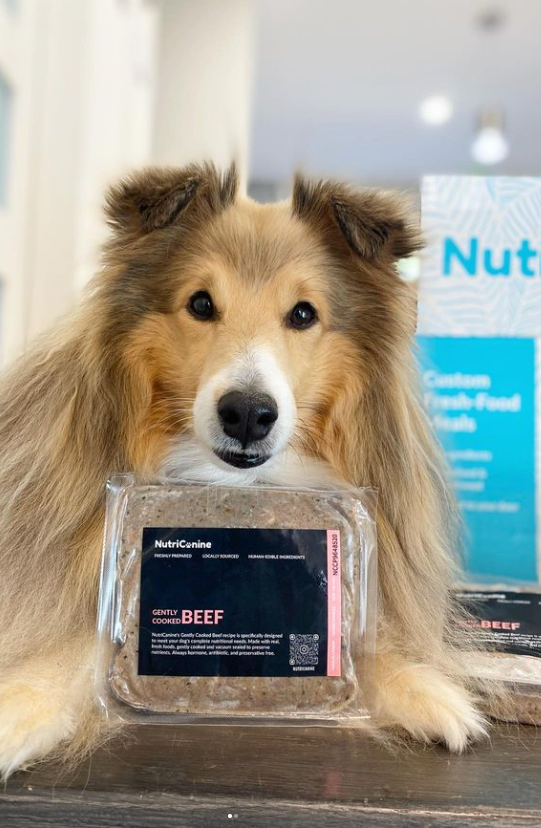
“I have three pups, all picky eaters, and they devoured their meals! I’m so happy to have found a quick, easy and super healthy food.”
 Verified Purchase
Essential Nutrients for Dogs: What Every Pet Parent Needs to Know
Essential Nutrients for Dogs: What Every Pet Parent Needs to Know
Every dog owner wants their pet to thrive. But when it comes to feeding our dogs well, most of us focus on ingredients: chicken, sweet potato, salmon, brown rice. While choosing quality ingredients matters, what truly drives your dog's health is the nutrients those ingredients deliver.
Dog nutrition is more complex than it might appear on a bag or tin. A diet that looks healthy on the surface can still leave your dog deficient in critical nutrients if it isn't properly balanced. Understanding what your dog actually needs, and why, is the first step toward making confident, informed feeding decisions.
According to established veterinary nutrition science, dogs require six essential nutrient categories to support every system in their body: protein, fats, carbohydrates, vitamins, minerals, and water. Each plays a unique and irreplaceable role. This article breaks down each one, explains why balance matters more than any single ingredient, and shows you how to make sure your dog's diet covers all the bases.

What Are Essential Nutrients?
Essential nutrients are substances that a dog's body cannot produce in sufficient quantities on its own. They must be supplied through diet. These nutrients are not optional extras; they are physiological requirements that support growth, tissue maintenance, immune defence, energy production, and organ function throughout every life stage.
Here's an important distinction: nutrients matter more than specific ingredients. Two diets with very different ingredient lists can be nutritionally equivalent, and two diets with similar ingredients can vary dramatically in their nutritional profiles. This is why the phrase "complete and balanced dog food" carries real meaning. It signals that a diet meets established nutritional standards rather than simply containing recognizable whole-food ingredients.
The six essential nutrient categories recognized by veterinary nutrition bodies including AAFCO (Association of American Feed Control Officials) and FEDIAF (European Pet Food Industry Federation) are: protein, fats, carbohydrates, vitamins, minerals, and water.

1. Protein: The Building Block of Health
Protein is arguably the most discussed nutrient in canine nutrition, and for good reason. It serves as the structural foundation for muscle, skin, hair, nails, cartilage, tendons, and organs. Beyond structure, protein provides the amino acids needed to synthesize enzymes and hormones, support the immune system, and facilitate tissue repair.
Dogs require 10 essential amino acids that must come from food: arginine, histidine, isoleucine, leucine, lysine, methionine, phenylalanine, threonine, tryptophan, and valine. High-quality animal proteins such as chicken, beef, turkey, salmon, and eggs contain a complete amino acid profile that is highly digestible for dogs.
What Protein Does in the Body
- Builds and maintains lean muscle mass
- Produces antibodies that support immune defence
- Repairs damaged tissues after injury or exercise
- Synthesizes enzymes and hormones including insulin and digestive enzymes
- Contributes to energy production when carbohydrates and fats are insufficient
Signs of inadequate protein intake can include muscle wasting, poor coat quality, slow wound healing, weakened immune response, and low energy. Puppies, senior dogs, and highly active dogs typically require more protein than the average adult dog. For more on how life stage shapes nutritional needs, see our article on what makes puppy food different from adult dog food.
2. Fats: A Concentrated Source of Energy
Dietary fat is the most energy-dense macronutrient, providing approximately 2.25 times more energy per gram than protein or carbohydrates. But fat's role in canine nutrition extends well beyond fuel.
Fats support the absorption of fat-soluble vitamins A, D, E, and K. They provide the structural material for cell membranes, support brain and neurological development, and are critical for maintaining healthy skin and a glossy, resilient coat. Essential fatty acids, meaning those the dog cannot synthesize independently, must be obtained through diet.
Omega-3 and Omega-6 Fatty Acids
The two most important classes of essential fatty acids in dog nutrition are omega-3 and omega-6. Both are necessary, but the balance between them matters greatly. Modern diets often skew too high in omega-6 relative to omega-3, which can promote low-grade inflammation.
Within the omega-3 family, EPA (eicosapentaenoic acid) and DHA (docosahexaenoic acid) are the most biologically active. These long-chain fatty acids, found primarily in marine oils and oily fish, support joint health, skin and coat condition, cardiovascular function, and cognitive development in puppies. See our in-depth guide on natural sources of omega-3s for dogs to learn which ingredients deliver the best EPA and DHA.
Signs of fat deficiency can include a dull, flaky coat, dry skin, poor wound healing, and increased susceptibility to infection.
3. Carbohydrates: Fuel for Daily Activity
Carbohydrates are among the most misunderstood nutrients in the dog food conversation. Some grain-free marketing has left pet parents with the impression that carbohydrates are inherently harmful. The reality is more nuanced. Carbohydrates are not classified as essential nutrients for dogs because dogs can produce glucose from protein via gluconeogenesis. However, well-chosen digestible carbohydrates contribute meaningfully to a healthy, balanced diet.
For a balanced look at carbohydrates in context, our article on common dog food myths debunked addresses the grain-free debate with science rather than marketing.
Why Carbohydrates Belong in a Healthy Dog Diet
- Provide a readily available energy source for daily activity and organ function
- Supply dietary fibre that supports healthy gut motility and stool consistency
- Feed beneficial gut bacteria, supporting the microbiome and immune function
- Contribute micronutrients and phytonutrients when sourced from whole foods
Digestible carbohydrate sources such as sweet potato, white potato, and squash are excellent examples of carbohydrates that bring genuine nutritional value beyond calories. Butternut squash, for instance, provides beta-carotene, fibre, and potassium alongside its digestible starch. Our post on can dogs eat butternut squash explores this ingredient in more detail.
Fibre deserves special mention. Soluble fibre supports the growth of beneficial gut bacteria and produces short-chain fatty acids that nourish the intestinal lining. For more on supporting gut health through diet, see our guide to prebiotics, probiotics, and postbiotics for dogs.
4. Vitamins: Small Nutrients with Big Responsibilities
Vitamins are organic compounds required in small amounts to regulate metabolism, support immune function, enable biochemical reactions, and protect cells from damage. Dogs require both fat-soluble vitamins (A, D, E, K) and water-soluble vitamins (the B complex). Unlike fat-soluble vitamins, which can be stored in body fat and the liver, water-soluble vitamins must be replenished regularly through diet.
Fat-soluble vitamins can accumulate to toxic levels if oversupplemented, which is one reason why formulating a truly balanced diet requires careful calculation rather than ingredient intuition alone.
5. Minerals: Supporting Every System in the Body
Minerals are inorganic nutrients that dogs need for bone structure, fluid balance, oxygen transport, nerve transmission, muscle contraction, enzyme function, and hormonal regulation. They are divided into macrominerals (required in larger amounts) and trace minerals (required in smaller but equally critical amounts).
Mineral balance is particularly important. Calcium and phosphorus, for example, must be present in the correct ratio (generally between 1:1 and 2:1, calcium to phosphorus) for proper bone mineralization. Too much or too little of either can result in skeletal abnormalities, especially in large breed puppies. This is one of the primary reasons that feeding meat alone, without careful mineral supplementation and balancing, is nutritionally insufficient.
Iron plays a role that pet parents often underestimate: it carries oxygen through the bloodstream via haemoglobin. Deficiency leads to anaemia, fatigue, and reduced exercise tolerance. Organ meats, particularly liver, are among the richest dietary sources of bioavailable iron for dogs.
6. Water: The Most Important Nutrient
Water is the most essential nutrient of all, yet it is the one most commonly overlooked in discussions about dog nutrition. Dogs are roughly 60-70% water by body weight. Every biological process depends on adequate hydration.
What Water Does for Your Dog
- Transports nutrients to cells and carries waste products away for elimination
- Regulates body temperature through panting and evaporation
- Supports digestion by moistening food and facilitating enzyme activity
- Lubricates joints and cushions organs
- Enables kidney filtration and urinary health
Dogs on dry kibble diets consume approximately 10% moisture from their food and must compensate by drinking significantly more water. Fresh, gently cooked dog food typically contains 65-80% moisture, much closer to what a dog would naturally consume through whole prey in the wild. This higher moisture content supports kidney function, reduces the risk of urinary tract issues, and aids dogs who are not enthusiastic water drinkers.
Fresh water should always be available regardless of what your dog eats. Monitor daily water intake; a sudden change in drinking habits can signal an underlying health issue worth discussing with your veterinarian.

Why Nutrient Balance Matters More Than Individual Ingredients
It is tempting to assume that feeding whole, recognizable ingredients automatically produces a nutritionally complete diet. Unfortunately, that assumption is inaccurate, and the consequences of an unbalanced diet can be serious.
A landmark study examining home-prepared diets for dogs found that the vast majority were nutritionally incomplete, with deficiencies most commonly observed in calcium, zinc, choline, vitamin D, and vitamin E. These are not obscure micronutrients; they are foundational to skeletal health, immune function, and cellular integrity. Our breakdown of this research is covered in detail in: are home-prepared dog diets really complete and balanced?.
The Risks of Imbalanced Diets
- Deficiencies can develop gradually, with clinical signs appearing only after months or years of inadequate intake
- Nutrient excesses can be equally harmful: excessive vitamin D causes hypercalcaemia; too much calcium in growing large breed puppies distorts bone development
- Imbalanced calcium-to-phosphorus ratios are a common problem in meat-only diets and can lead to serious skeletal disease
- Even diets rich in whole proteins can be deficient in essential fatty acids, fat-soluble vitamins, and trace minerals
This is why regulatory bodies such as AAFCO and FEDIAF publish detailed nutritional standards for dog food. A diet labelled "complete and balanced" must meet minimum (and in some cases maximum) nutrient levels established by these organizations, verified either through formulation analysis or feeding trials. These standards exist to protect dogs from the consequences of nutritional gaps, however well-intentioned.
Signs Your Dog May Not Be Getting Proper Nutrition
Dogs cannot tell us when their diet is falling short, but their bodies often show the signs. If you notice any of the following, a diet review is warranted, and consulting a veterinary nutritionist is a smart next step.
- Dull, brittle, or excessively shedding coat
- Flaky skin or persistent skin irritation not explained by allergies
- Low energy or unexplained lethargy
- Frequent loose stools, gas, or digestive upset
- Unexplained weight loss or difficulty maintaining a healthy body condition
- Visible muscle loss, particularly along the spine and hindquarters
- Slow wound healing or frequent minor infections
- Poor dental health or persistently bad breath
Some of these signs can also indicate underlying health conditions unrelated to diet. A veterinarian can help rule out medical causes, while a veterinary nutritionist can assess whether the current diet may be contributing. For dogs managing specific health conditions, see our guide to specialized dog diets.

How Fresh Dog Food Helps Deliver Essential Nutrients
Fresh, gently cooked dog food represents one of the most straightforward ways to deliver high-quality, bioavailable nutrients in every meal. The ingredients remain close to their whole-food form, which preserves many of the naturally occurring vitamins, enzymes, and fatty acids that high-heat extrusion can compromise in traditional kibble production.
Research published in peer-reviewed journals, and documented in popular veterinary media, suggests that feeding a fresh diet may be associated with improved longevity and health outcomes in dogs. Our article on how fresh food could help your dog live longer discusses this evidence directly.
When a fresh diet is professionally formulated to meet AAFCO or FEDIAF standards, it delivers all six essential nutrient categories in balanced proportions. This means pet parents do not have to choose between palatability and nutritional completeness. They can have both. For dogs managing specific fat-sensitive conditions, fresh food options can also be optimized accordingly, as explored in our guide to choosing the best low-fat food for dogs.
Key Nutritional Advantages of Fresh Dog Food
- High-quality animal proteins with complete amino acid profiles
- Whole-food sources of vitamins and minerals that are naturally bioavailable
- Healthy dietary fats including EPA and DHA from fish-based recipes
- Digestible carbohydrates from whole vegetables and legumes that support gut health
- High moisture content that supports hydration and kidney function
- No synthetic preservatives, artificial colours, or low-quality fillers
Compared to formulating a balanced homemade diet independently, a professionally prepared fresh food diet removes the guesswork entirely while still giving your dog the benefits of real food.

Why NutriCanine Prioritizes Complete and Balanced Nutrition
NutriCanine: Gently Cooked. Expertly Balanced. Made in Canada.
At NutriCanine, we believe that every dog deserves food made with the same care and nutritional rigour that we would want for ourselves. Our fresh, gently cooked recipes are designed from the ground up to meet the essential nutrient requirements that veterinary science has established for dogs at every life stage.
- Personalized meal plans tailored to your dog's age, weight, breed, and health goals
- Fresh, gently cooked recipes that preserve nutrient integrity without harsh processing
- High-quality Canadian ingredients: real meats, whole vegetables, and purposeful inclusions
- Formulated to meet AAFCO nutritional standards for complete and balanced nutrition
- No fillers, no artificial preservatives, no ingredients that are there just to pad the recipe
- Expert formulation guided by companion animal nutritionists to ensure every meal covers all six essential nutrient categories
- Delivered to your door on a schedule that works for your household, making a healthy dog diet effortless for busy pet parents
We also offer transparency about what goes into our food and why. If you are curious about how fresh food stacks up against other formats, our comparison of fresh cooked vs. raw dog food offers a clear, evidence-based look at the differences.

Take Home Message
Proper canine nutrition is not about following food trends or picking ingredients that sound impressive on a label. It is about consistently supplying the six essential nutrient categories, in the right amounts, in the right ratios, every day. Protein builds and repairs. Fats fuel and protect. Carbohydrates support energy and gut health. Vitamins regulate. Minerals structure. Water sustains it all.
No single nutrient is more important than the whole. A genuinely healthy dog diet is one where all six categories are present, balanced, and bioavailable. That is the standard every dog food should be held to, whether it comes in a bag, a can, or a freshly prepared meal delivered to your door.
If you are ready to simplify the question of whether your dog is truly getting everything they need, NutriCanine makes it easy. Our personalized, gently cooked meal plans are built by nutrition professionals, made with real Canadian ingredients, and formulated to complete and balanced standards for every life stage.
Explore NutriCanine's personalized fresh food meal plans at nutricanine.ca and take the first step toward a diet your dog will feel the difference in.