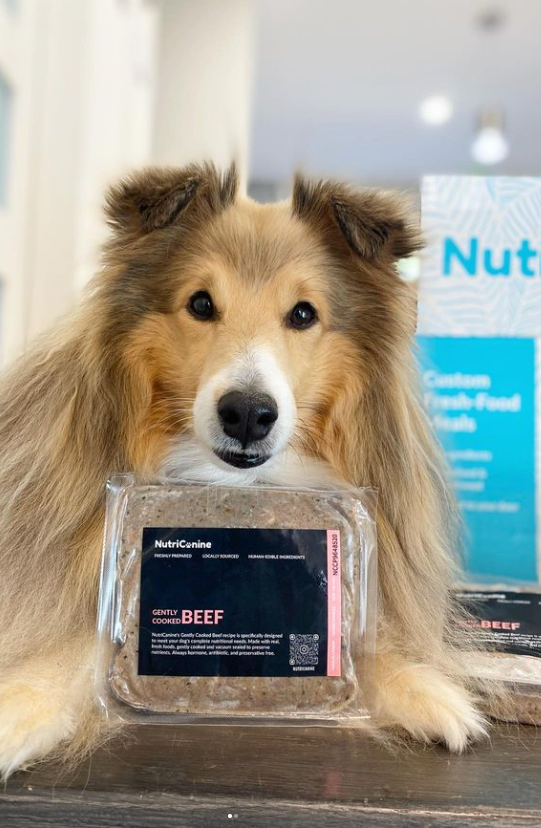
“I have three pups, all picky eaters, and they devoured their meals! I’m so happy to have found a quick, easy and super healthy food.”
 Verified Purchase
Quick Stats About the Newfoundland


Height 26–28 inches

Weight 100–150 lbs

Lifespan 8–10 years

Energy Level Moderate

Shedding Heavy

Grooming High
Breed Group
Working
Demeanor
Gentle, calm, and deeply devoted
Temperament
Sweet-natured, patient, and protective
Newfoundland: Everything You Need to Know

The Newfoundland is one of the most beloved giant breeds in the world, renowned as much for its enormous heart as for its impressive size. Originating on the island of Newfoundland in Canada, this breed was developed by fishermen to haul nets, pull carts, and perform water rescues—feats made possible by their powerful build, webbed feet, and natural affinity for swimming. Despite their imposing stature, Newfoundlands are famously gentle, patient, and deeply nurturing, earning them the nickname "the gentle giant." They are exceptional with children and are often described as natural nannies. Their dense, water-resistant double coat and calm temperament make them well suited to a variety of climates and family environments. Newfoundlands form deep bonds with their families and can experience separation anxiety if left alone for extended periods. Because of their size, they require thoughtful management of diet, exercise, and healthcare to avoid the joint and cardiac issues that commonly affect giant breeds. Their relatively short lifespan compared to smaller breeds makes every year of good health especially precious. Understanding the specific needs of the Newfoundland—from their nutritional requirements to their exercise tolerance—helps owners provide the very best quality of life. A well-fed, well-loved Newfoundland is truly one of the most magnificent companions a family can have.
Create the Perfect Meal Plan for Your NewfoundlandWhat Makes a Newfoundland Unique
The Newfoundland's history as a working water dog sets it apart from virtually every other breed. Their natural swimming ability is so exceptional that they have been used in water rescue operations worldwide, and many countries still train Newfoundlands as active lifesaving dogs. Their coat contains a double layer specifically adapted to cold water immersion, providing insulation and buoyancy. Newfoundlands are among the few giant breeds consistently described as gentle and trustworthy with small children, even in the absence of specific training. Their drooling—a beloved if sometimes inconvenient trait—is a product of their large, loose jowls, which were practical for working in cold, wet environments. Despite their working-dog heritage, they are famously content to spend much of their day relaxing with their family, making them unusually adaptable for a large breed. The Landseer colour pattern—white with black markings—is named after the British painter Sir Edwin Henry Landseer, who frequently depicted Newfoundlands in his 19th-century artwork. Their deep, resonant bark is more of a reassuring presence than an alarm, as Newfoundlands rarely bark without good reason. They are one of the few breeds known to instinctively perform mouth-to-mouth-style water rescues by pulling struggling swimmers to safety. Truly a breed that combines power with unparalleled gentleness, the Newfoundland is in a class entirely its own.
Create a Meal Plan That Caters to Your Newfoundland's Unique Needs
Health Considerations for Newfoundland
Like all purebred dogs, the Newfoundland has a set of health conditions they are more predisposed to than other breeds. Being informed about these risks allows owners to take preventive action, schedule appropriate screenings, and make dietary and lifestyle choices that minimize their impact. Many of these conditions are directly influenced by nutrition, making diet one of the most powerful tools in a Newfoundland owner's preventive health toolkit. The following are among the most important health considerations for this breed.
Hip and Elbow Dysplasia
Hip and elbow dysplasia are among the most significant orthopedic concerns for Newfoundlands, as their massive body weight places enormous stress on developing joints. Dysplasia occurs when the hip or elbow joint develops improperly, creating a loose fit that leads to painful cartilage wear and progressive arthritis. Symptoms typically include lameness, stiffness after rest, reluctance to climb stairs, and reduced activity levels. Maintaining a healthy body weight throughout life—particularly during puppyhood—is one of the most effective prevention strategies, as rapid growth and excess weight significantly worsen joint outcomes. Anti-inflammatory nutrients such as omega-3 fatty acids (EPA and DHA), glucosamine, and chondroitin are valuable dietary additions that help support joint health and cartilage integrity.
Dilated Cardiomyopathy (DCM)
Newfoundlands are at elevated risk for dilated cardiomyopathy, a serious heart condition in which the heart muscle weakens and the chambers enlarge, reducing the heart's ability to pump blood effectively. This is one of the leading health concerns in the breed and is monitored through annual cardiac evaluations in responsible breeding programs. Early signs include decreased exercise tolerance, a persistent cough, laboured breathing, and fainting episodes. Taurine and L-carnitine deficiencies have been implicated in some cases of DCM in dogs, and ensuring adequate intake of these amino acids through fresh, high-quality protein sources may be beneficial. Fish and red meats such as beef naturally contain meaningful amounts of these nutrients, making fresh food diets a sound dietary foundation. All Newfoundlands should receive routine cardiac screenings, and owners should work closely with their veterinarian or a veterinary cardiologist if any signs of heart disease emerge.
Gastric Dilatation-Volvulus (Bloat)
Gastric dilatation-volvulus (GDV), commonly known as bloat, is a life-threatening emergency seen with higher frequency in large, deep-chested breeds like the Newfoundland. In GDV, the stomach fills with gas and can rotate on its axis, cutting off blood supply to vital organs and causing shock within hours. Preventive measures include feeding two to three smaller meals per day rather than one large meal, using slow-feeder bowls to reduce the rate of food intake, and restricting intense exercise in the hour before and after meals. Avoiding highly fermentable ingredients and excess dietary air (as can occur with airy, dry kibble) may also reduce risk. Some owners and veterinarians elect to perform a prophylactic gastropexy—a surgical procedure that tacks the stomach to the abdominal wall to prevent rotation—especially in breeds with a known family history of bloat.
Cystinuria
Cystinuria is a metabolic disorder in which the kidneys fail to properly reabsorb the amino acid cystine, leading to its accumulation in the urine and the formation of cystine bladder or kidney stones. The Newfoundland breed has a notably elevated rate of cystinuria compared to other breeds, with males being more severely affected than females. Signs include straining to urinate, blood in the urine, frequent urination, or a complete inability to urinate—the last being a veterinary emergency. Dietary management focuses on promoting dilute urine through high moisture intake and, in some cases, reducing the dietary intake of cystine precursors (methionine and cysteine). Fresh food diets with high moisture content inherently support urinary health better than low-moisture dry kibble. Dogs diagnosed with cystinuria should work with their veterinarian to develop an individualized dietary plan alongside appropriate medical management.

Nutrition for Every Stage and Need
Feeding a Newfoundland correctly is one of the most important—and nuanced—aspects of caring for this magnificent giant breed. Their size, growth rate, and predisposition to joint and cardiac conditions all have direct dietary implications. NutriCanine's fresh, human-grade meal plans offer the nutritional precision and ingredient quality that Newfoundland owners can trust, all formulated to meet AAFCO guidelines for complete and balanced nutrition.
Nutrition for Newfoundland Puppies

Newfoundland puppies grow at an astonishing rate, and their diet must be carefully managed to support healthy, steady development without the rapid growth that strains developing joints. Large and giant-breed puppy formulas are essential—they provide calcium and phosphorus in ratios specifically calibrated to prevent the skeletal abnormalities that can result from over-supplementation or excessively rapid growth. Excess caloric intake during the puppy phase is one of the most significant risk factors for hip and elbow dysplasia, making portion control critically important from day one. High-quality protein supports lean muscle development without promoting excessive fat storage. DHA supports neurological development, which is especially valuable for a breed as intelligent and sensitive as the Newfoundland.
Nutrition for Adult Newfoundlands
Adult Newfoundlands need a diet that maintains their impressive musculature without contributing to weight gain, which can rapidly worsen joint health and cardiovascular strain. High-quality, lean proteins from sources like chicken, turkey, or fish provide essential amino acids including taurine and L-carnitine to support heart health. Omega-3 fatty acids from fish or fish oil help manage the low-grade systemic inflammation associated with large breed joint wear. Controlled caloric density is important, as Newfoundlands are not typically very high-activity dogs and can gain weight if fed according to size alone rather than actual energy expenditure. Joint-supporting nutrients such as glucosamine and chondroitin are worthwhile additions for adult Newfoundlands, especially those showing early signs of stiffness.
Nutrition for Senior Newfoundlands
Newfoundlands are considered seniors around six to seven years of age—earlier than smaller breeds—due to the accelerated aging associated with giant body size. Senior Newfoundlands benefit from a diet that supports joint health, cardiac function, kidney health, and healthy weight maintenance simultaneously. Protein should remain high and of excellent quality to prevent the muscle wasting (sarcopenia) that accelerates with age. Phosphorus levels may need to be moderated if kidney function begins to decline, as is common in aging large dogs. Highly digestible, fresh whole-food diets are gentler on aging digestive systems and promote better nutrient absorption than heavily processed options.
Nutrition for Overweight Newfoundlands
Weight management is critically important for Newfoundlands, as even modest excess weight places disproportionate stress on their large joints and strains their cardiovascular system. An overweight Newfoundland is at significantly higher risk for worsened hip and elbow dysplasia, heart disease, and a shortened lifespan. Effective weight loss in giant breeds requires a controlled-calorie diet that still provides complete and balanced nutrition to avoid deficiencies. Increasing dietary fibre through vegetables helps promote a sense of fullness while keeping caloric intake low. Protein should remain high during weight loss to preserve lean muscle mass.
Nutrition for Newfoundlands with Sensitivities
While food allergies are not the most common issue in Newfoundlands, their dense coat can make skin conditions harder to detect, and dietary sensitivities may manifest as chronic ear infections, itching, or gastrointestinal upset. An elimination diet using a novel protein source (such as venison, rabbit, or duck) for eight to twelve weeks is the standard diagnostic approach for suspected food allergies. Fresh food diets are advantageous for elimination protocols because their ingredient lists are transparent and free from hidden additives, fillers, and cross-contaminating processing agents. Newfoundlands with cystinuria require special dietary attention and should be fed according to their veterinarian's guidance, typically with an emphasis on high moisture content. Dogs with cardiac concerns may require modifications to sodium levels and specific nutrient profiles, underscoring the value of a customizable fresh food plan.
Give Your Newfoundland the Nutrition They Deserve
The Newfoundland is a breed that gives unconditionally—offering loyalty, gentleness, and devotion on a truly grand scale. The least we can do in return is provide the very best nutrition to support their health and longevity. Fresh, human-grade food with precisely balanced nutrients supports their joints, heart, coat, and overall vitality in ways that heavily processed diets simply cannot match. NutriCanine's personalized plans are crafted with the needs of individual dogs in mind, accounting for size, age, health history, and activity level. Every meal is formulated to meet AAFCO guidelines for complete and balanced nutrition, ensuring your Newfoundland receives everything they need and nothing they don't. Your gentle giant deserves the very best—and NutriCanine is here to help you give it to them.
I'm a Newfoundland Dog Owner and Here's What I Wish I Knew
Ready to Provide the Best Nutrition for Your Newfoundland?
NutriCanine's personalized meal plans are designed to meet the unique nutritional needs of your Newfoundland. Our fresh, high-quality ingredients ensure your dog gets the best possible nutrition. Start your journey to better health and happiness for your Newfoundland today.
Our Gently Cooked Recipes
- Guided by science
- Made fresh daily
Our recipes, developed by an agronomist, are nutrient-rich, delicious, and complete and balanced, meeting AAFCO guidelines.

Grain Free
Chicken Recipe
Bowl lickin' good - bet we don't keep our recipe a secret! For healthier skin and coat with nutrient-dense broccoli and carrots.
Learn More
Low Fat
Turkey Recipe
Just like your Thanksgiving meal, but specially designed for your dog. For improved digestibility, enhanced by superfood kale and butternut squash.
Learn More
Picky-Eater Approved
Beef Recipe
Perfect for the pickiest eaters and gluten-sensitive dogs with highly digestible rice and antioxidant-rich berries.
Learn More
Heart Healthy
Lamb Recipe
Designed for dogs with allergies and sensitivities, enriched by nutrient-packed green beans and carrots.
Learn More
Hypoallergenic & GI Support
Pork Recipe
Wrap your dog in comfort with every bowl - soothing relief for itchy skin and sensitive tummies, with irresistible flavour.
Learn More